Year-End Review: How the New Tax Law Could Impact Your Taxes

Earlier this year, President Trump signed the “One Big Beautiful Bill” into law, reinforcing many provisions from the 2017 Tax Cuts and Jobs Act, along with other significant tax changes. As we approach the end of the year, here’s a summary of the law’s permanent and temporary changes — and what they mean for you.

Permanent Changes

The following provisions will become a permanent part of the tax code:

• Seven tax brackets remain, with a top rate of 37% and a bottom rate of 10%.
• The mortgage interest deduction remains at its current limit of $750,000 for joint filers ($375,000 for single filers).
• The State and Local Tax (SALT) deduction will increase to $40,000 and then revert to $10,000 in 2030. The higher SALT cap will phase out for incomes over $500,000.
• The standard deduction increases to $15,750 for single filers and $31,500 for joint filers, indexed for inflation after 2025.
• Lifetime gift and estate tax exclusions increase to $15 million for single filers and $30 million for filers who are married and filing jointly, indexed for inflation going forward.
• Child Tax Credit will increase to $2,200 per child starting in 2025.
• Non-itemizers can claim a deduction for charitable contributions of up to $1,000 ($2,000 for couples) starting in 2026.

Promo for an article titled Your Year-End Financial Checklisty: Moves to Make Before 2025 Ends.

Temporary Provisions (4 Years)

The legislation includes some temporary deductions and credits that are valid for the 2025-2028 tax years only.

• Tip and overtime deductions: Workers can deduct up to $25,000 in qualifying tip income and $12,500 in overtime pay ($25,000 for joint filers). These deductions phase out with income over $150,000 ($300,000 for joint filers).
• Additional deduction for seniors:Those over the age of 65 will get an additional $6,000 deduction that begins to phase out at an income of $75,000 for single filers and $150,000 for joint filers. This is in addition to the $2,000 deduction for single filers and $3,200 for joint filers.
Vehicle loan interest deduction: Auto buyers can deduct up to $10,000 of loan interest for purchased vehicles whose final assembly took place in the U.S. The deduction would apply for single taxpayers with adjusted gross income of $100,000 or less ($200,000 for people filing jointly).

Promo for an article titled Before You Sell for a Loss, Make Sure You Know the Wash-Sale Rule.

Additional Provisions

New savings account: Parents and relatives can now contribute up to $5,000 a year to a new savings account for minor beneficiaries, called Trump accounts. Initially acting like a non-deductible IRA, contributions can be made until the beneficiary reaches the age of 18. Then, the account would effectively convert to a traditional IRA. Additionally, parents of children born between Jan. 1, 2025, and Dec. 31, 2028, would qualify for $1,000 in federal money to start the account.
Expanded 529 plan uses: Acceptable uses include miscellaneous expenses such as testing fees, tutoring outside the home, and educational therapies, as well as tax-free withdrawals for recognized postsecondary credential programs.
Broader HSA eligibility: More health plan types and participant categories are included.
Social Security taxes: The legislation did not eliminate taxes on Social Security benefits, which remain taxable up to 85% for individuals with income greater than $34,000, or $44,000 for a couple. However, the $6,000 deduction for those 65 and older may help offset taxes on Social Security benefits for some over the next four years.

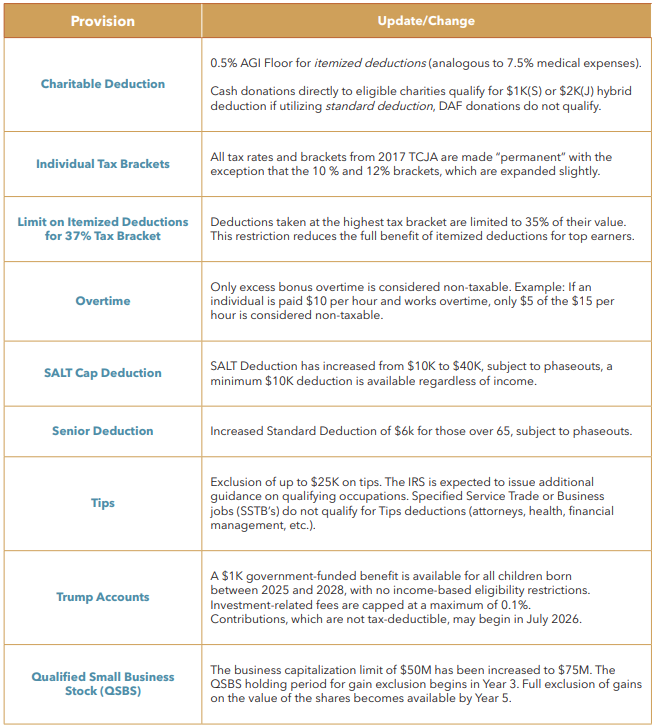
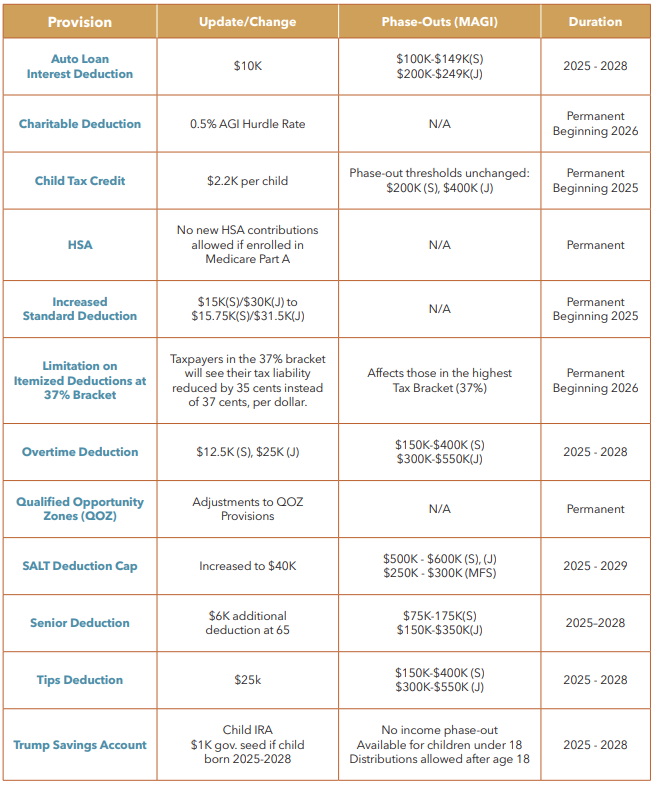
Key Individual Tax Changes

As you review the new tax legislation, it may be the perfect time to review your financial planning needs as well. This includes revisiting your investment portfolio, assessing tax planning opportunities, reevaluating retirement goals, and managing your wealth transfer and legacy plans.

As we learn more about the Trump Savings accounts and other aspects of the bill, we will continue to communicate and educate.

This summary of the new legislation contains merely a portion of the items that may apply to your family. We are always happy to meet and discuss any of the above to ensure that you remain on track with your financial profile and your goals.

Promo for an article titled Here's Why the Stock Market is the Best Place to Build Wealth.

The CD Wealth Formula

We help our clients reach and maintain financial stability by following a specific plan, catered to each client.

Our focus remains on long-term investing with a strategic allocation while maintaining a tactical approach. Our decisions to make changes are calculated and well thought out, looking at where we see the economy heading. We are anticipating and moving to those areas of strength in the economy and in the stock market. 

We will continue to focus on the fact that what really matters right now is time in the market, not out of the market. That means staying the course and continuing to invest, even when the markets dip, to take advantage of potential market upturns. We continue to adhere to the proven disciplines of diversification, periodic rebalancing, and forward-looking strategies, while avoiding reliance on stale retrospective data.

It is important to focus on the long-term goal, not on one specific data point or indicator. Long-term fundamentals are what matter. In markets and moments like these, it is essential to stick to the financial plan. Investing is about following a disciplined process over time.

Source: Kestra Investment Management

Your Year-End Financial Checklist: Moves to Make Before 2025 Ends

As we prepare to wrap up another year, it is the perfect time to review year-end planning strategies to ensure your wealth plan reflects changes in your circumstances or goals, the current tax environment, and the economic landscape.

The end of the year is an important time for making financial decisions that can have an impact in the year ahead — and for years to come. We recommend that you review the planning strategies below to consider and discuss.

Income Tax Strategies

Traditional year-end planning focuses on deferring income into a future year and accelerating deductions into the current year.

— If you anticipate being in a lower tax bracket next year:

• Defer income if possible so you can postpone paying the tax and have that income at a lower bracket.
• If you itemize on your tax return, bunch your medical expenses in the current year to meet the percentage of your adjusted gross income to claim those deductions.
• Make your January mortgage payment in December so you can deduct the interest on this year’s return.

Promo for an article titled Turning Investment Losses into Gains: The Art of Tax-Loss Harvesting.

Tax-Related Investment Strategies

— Tax-loss harvesting is the strategy of selling securities at a loss to offset a capital gain liability, either for today or in the future. Securities must be sold by Dec. 31, the last trading day of 2025, to realize a capital gain or loss.

• Harvest losses by selling taxable investments. To avoid the IRS wash-sale rule, you must wait at least 31 days before buying back a holding that’s sold for a loss.
• Harvest gains by selling taxable investments if you have a tax loss carryforward.

— Make sure that you have satisfied your required minimum distributions (RMD).

• If you fail to take your RMD, this may result in a 25% penalty. (This is down from 50%.)
• If you own an inherited IRA, RMD may be required separately for that account as well. If you inherited an IRA after 2019, it must be depleted by the end of the 10th year. If the original owner of the IRA was already taking RMDs at the time of death, you must take an annual distribution in years 1-9, in addition to making sure the IRA is fully depleted in year 10.
• Beneficiaries of a Roth IRA do not have to take RMDs. However, the 10-year rule still applies, and the entire account must be fully distributed by the end of the 10th year.

Promo for an article titled Before You Sell for a Loss, Make Sure You Know the Wash-Sale Rule.

Retirement Planning Strategies

— Maximize your IRA contributions. You may be able to deduct annual contributions of up to $7,000 to your traditional IRA and $7,000 to your spouse’s IRA ($8,000 if over the age of 50).

— Make a Roth IRA contribution if you qualify under the applicable income limits.

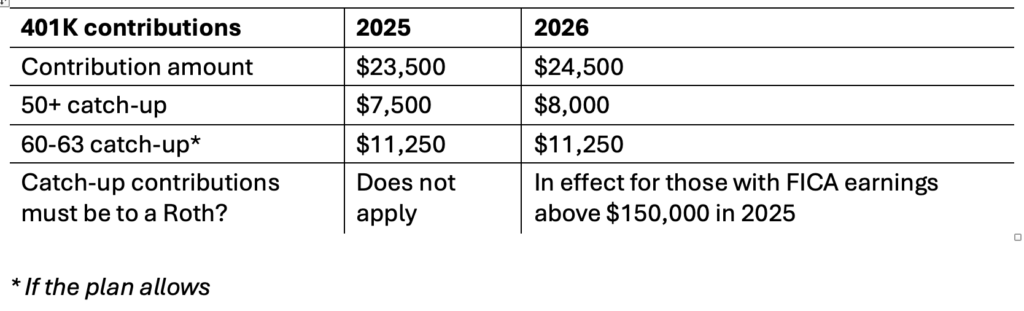
— Consider increasing or maximizing your 401(k) contribution; the maximum for 2025 is $23,500 for those under age 50 and $31,000 for those 50 and older. Contributing more to your 401(k) can reduce your adjusted gross income while boosting your long-term retirement savings.

— New in 2025: If you are between 60 and 63, you can contribute an additional amount to your employer-sponsored retirement plan.

— Consider making contributions to a Roth 401(k) if your plan allows.

— Consider setting up a Roth IRA for each of your children who have earned income during the year.

Gifting Strategies

— Consider making gifts up to $19,000 per person, as allowed under the federal annual gift tax exclusion. You can give up to $19,000 this year to as many people as you want without triggering gift taxes. Note: Payments made directly to educational and/or medical institutions on behalf of your intended beneficiary do not count towards your annual exclusion amount — or against your lifetime estate tax exclusion.

— Create a donor advised fund for an immediate income tax deduction and provide immediate and future benefits to charity over time.

— If you already have a donor advised fund or want to donate to a charity, consider gifting appreciated assets that have been held longer than one year to get the fair market value income tax deduction while avoiding income tax on the appreciation.

— If over the age of 70½, consider making a direct transfer from an IRA to a public charity. The distribution is excluded from gross income, and you can give up to $108,000 as a tax-free gift from your IRA, which may fully satisfy RMD requirements.

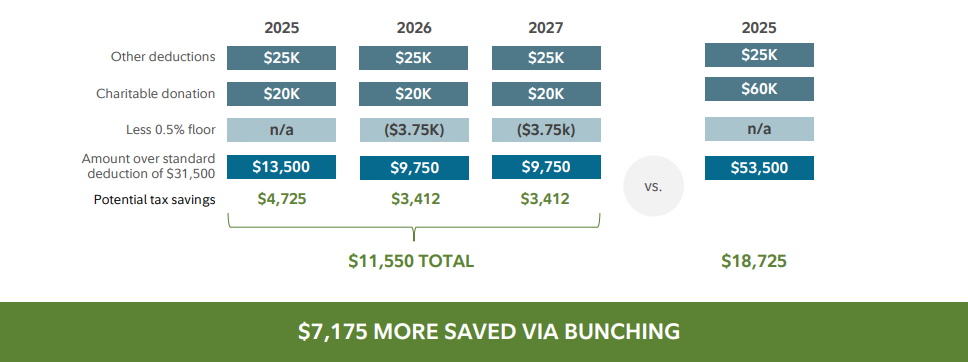
— Consider combining multiple years of charitable giving into a single year to exceed the standard deduction threshold. This is called “bunching.” The chart below illustrates how bunching can reduce taxes if executed properly.

Bunching in 2025

Scenario: Donor has income of $750K, is in the 35% income federal tax bracket, files jointly as a married couple, and itemizes deductions.

Source: Fidelity Charitable. This is a hypothetical example for illustrative purposes only. This example does not take into account other deductions. Information herein is not legal or tax advice. As with any tax-planning strategy, there may be additional considerations that pertain to your personal situation. Other strategies may provide more flexibility and similar savings. Please consult your tax advisor.

Wrapping up 2025, Planning for 2026

— Discuss major life events with CD Wealth to confirm you have clarity in your current situation.

— Communicate with your CPA to provide capital gains and investment income information for a more accurate year-end projection.

— Check your Health Savings Account (HSA) contributions for 2025. If you qualify, you can contribute up to $4,300 (individual) or $8,850 (family) — and an additional $1,000 catch-up if over the age of 55.

— Double-check your beneficiary designations for retirement plans, IRAs, Roth IRAs, annuities, and life insurance policies.

— If you do not already have identity theft protection, consider purchasing a service to help protect you and your family.

The end of the year is a perfect time to review your financial planning needs. This includes reviewing the investment portfolio, assessing year-end tax planning opportunities, reviewing retirement goals, and managing your legacy plans. The list above includes some of the items that may apply to you and your family. 

We are happy to meet to discuss any of the above to ensure you remain on track with your financial goals.

Promo for an article titled Here's Why the Stock Market Remains the Best Place to Build Wealth.

The CD Wealth Formula

We help our clients reach and maintain financial stability by following a specific plan, catered to each client. 

Our focus remains on long-term investing with a strategic allocation while maintaining a tactical approach. Our decisions to make changes are calculated and well thought out, looking at where we see the economy is heading. We are not guessing or market timing. We are anticipating and moving to those areas of strength in the economy — and in the stock market. 

We will continue to focus on the fact that what really matters right now is time in the market, not out of the market. That means staying the course and continuing to invest, even when the markets dip, to take advantage of potential market upturns. We continue to adhere to the tried-and-true disciplines of diversification, periodic rebalancing and looking forward, while not making investment decisions based on where we have been.

It is important to focus on the long-term goal, not on one specific data point or indicator. Long-term fundamentals are what matter. In markets and moments like these, it is essential to stick to the financial plan. Investing is about following a disciplined process over time.

Sources: Fidelity

Here’s Why the Stock Market Remains the Best Place to Build Wealth

At CD Wealth Management, we believe the stock market remains the best place to invest money, both today and for the long term. Stocks represent ownership in the most innovative, productive and forward-looking companies across every industry and region — and the market is the world’s greatest engine for growth and wealth creation.

As the global economy expands and technology connects more people, investing is no longer just for the wealthy. As the Internet has opened access to information and fostered transparency, markets have become more democratic and resilient. With billions now taking part and a steady flow of capital, innovation, efficiency and long-term growth can thrive.

We believe that trend will only deepen over the next several decades. Innovation compounds — it doesn’t go backwards. We will not return to a world without smartphones or instant access to information. Advances in artificial intelligence, biotechnology, clean energy and global connectivity will continue to reshape how we live, how businesses grow and how people invest.

The stock market captures that progress in one place. It reflects human ingenuity, enterprise and adaptability, the very forces that have driven wealth creation for more than a century.

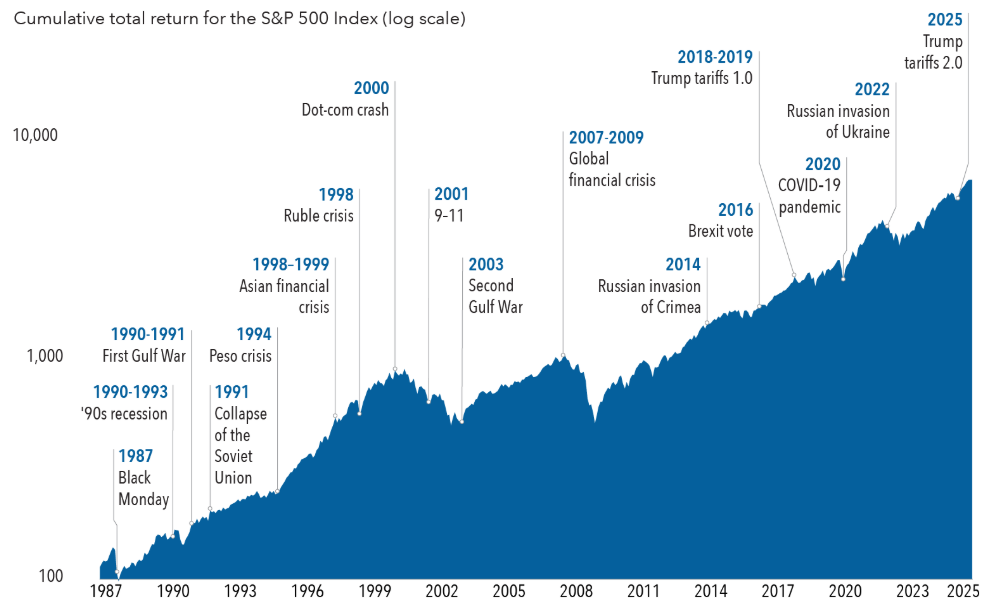
Yes, the market moves up and down in the short term — and it can be volatile, as we have seen repeatedly, especially in the last five years. But over time, it has rewarded investors who stay disciplined and participate in the growth of the global economy. The market remains liquid, transparent, and resilient.

We are never going to claim to know what will happen tomorrow. What we do know, however, is that history has consistently rewarded patience, discipline and time in the market. Our process is built on those principles, not on predictions.

That is why we remain committed to staying invested through every cycle, whether we are at an all-time high or a major low.

+++

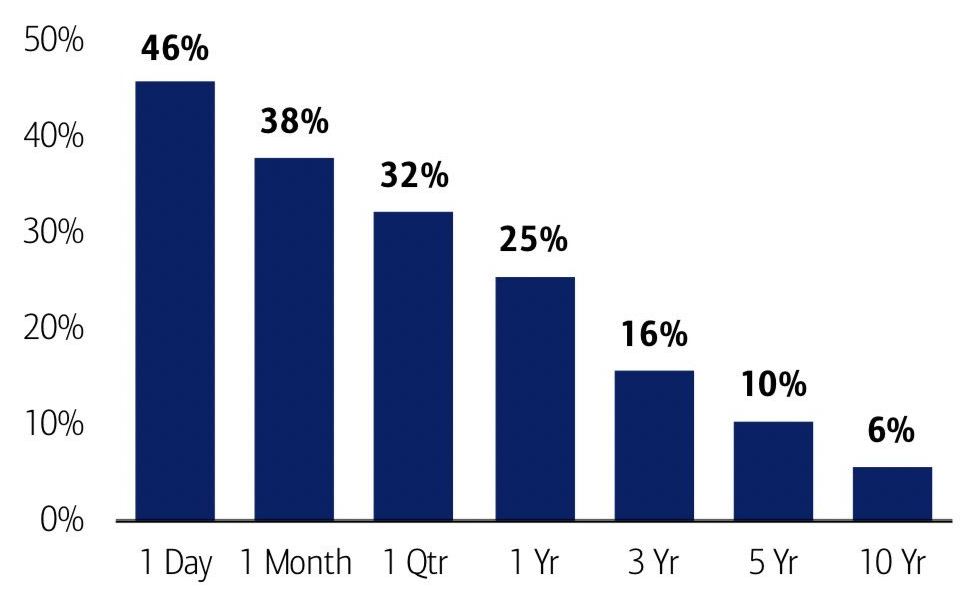
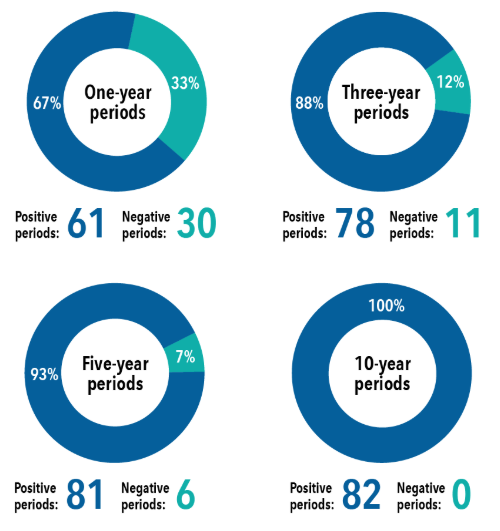
History has shown the longer the period, the greater the chance of a positive outcome.

Graphs showing the performance of investments over different time periods.
Source: S&P 500 Index. S&P 500 Index is a market capitalization-weighted index based on the results of approximately 500 widely held common stocks. The index is unmanaged and, therefore, has no expenses. Investors cannot invest directly in an index.

+++

After such a strong run in the markets, it’s natural for investors to wonder: What matters most right now?

It is easy to feel confident when markets are rising, but confidence can fade quickly when volatility returns. Even if markets were to drop 30% next week, however, we would maintain the same steady long-term view that the stock market is the best place to generate wealth and value.

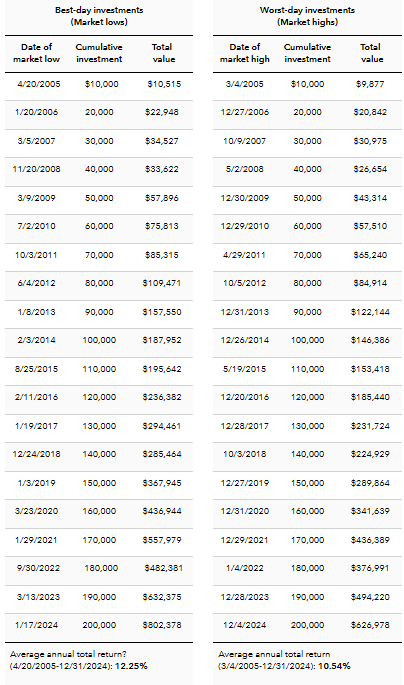
The market goes up and down, but over time it has always rewarded those who stay invested. The chart below shows two hypothetical investments in the S&P 500 over a 20-year period. Each investor contributed $10,000 per year, but one investor picked the best day to invest each year, and the other investor picked the worst day each year. Even with the worst market timing each year, the average annual return would have been 10.54%, compared to the best return of 12.25%.

The takeaway: Even selecting the worst day to invest, if you continue investing, you would have come out ahead.

Timing Isn’t Critical to Long-Term Success

Table showing the value of investments on different trading days.
Source: S&P 500 Index

This is why we believe the stock market is the place to be. We are not basing this opinion on speculation, but rather we are participating in the ongoing story of growth, innovation and progress.

We are not trying to outguess the market. We are following evidence that shows that long-term investors who stay the course come out ahead. Our strength is in discipline and consistency, not in forecasting. That is why we keep investing, why we add during periods of opportunity, and why we trust the strategy that has worked over decades, not days.

We are not here to shy away from where we are in the market at any given moment. We are here to follow our process, remain long-term focused and trust the history that has rewarded investors for generations.

Promo for an article titled The Case for Staying Invested: The Market High Is Not a Warning Sign.

The CD Wealth Formula

We help our clients reach and maintain financial stability by following a specific plan, catered to each client. 

Our focus remains on long-term investing with a strategic allocation while maintaining a tactical approach. Our decisions to make changes are calculated and well thought out, looking at where we see the economy is heading. We are not guessing or market timing. We are anticipating and moving to those areas of strength in the economy — and in the stock market. 

We will continue to focus on the fact that what really matters right now is time in the market, not out of the market. That means staying the course and continuing to invest, even when the markets dip, to take advantage of potential market upturns. We continue to adhere to the tried-and-true disciplines of diversification, periodic rebalancing and looking forward, while not making investment decisions based on where we have been.

It is important to focus on the long-term goal, not on one specific data point or indicator. Long-term fundamentals are what matter. In markets and moments like these, it is essential to stick to the financial plan. Investing is about following a disciplined process over time.

Sources: Capital Group, S&P 500

The Market High Is Not a Warning Sign

The current bull market turned 3 years old on Oct. 12. In October 2022, the S&P 500 was down more than 25% from its peak. Tech stocks had been cut in half, and soaring interest rates dragged down both stocks and bonds by double digits.

History shows that bull markets tend to last. Since World War II, there have been 11 of them, with an average lifespan of just over five years. We’re only three years into the current one, and it’s already up about 90%. That may sound like a lot, and it’s fair to ask how long it can continue. Statistically, though, the average bull market since WWII has gained more than 190%. By that measure, this one could keep on trucking.

Bull Markets Last Longer Than You Think

Length of bull markets in months and when they started

Bar chart showing the ength of bull markets in months and when they started.
Source: Carson Investment Research, FactSet 10/10/25

Pundits often repeat, “Buy low, sell high,” and skeptics warn that what goes up must come down. But history tells a different story. All-time highs typically have been followed by significant selloffs. In fact, markets have often delivered better-than-average returns after reaching new highs.

Stocks typically make new highs when the economy and corporate earnings are strong, and those conditions don’t vanish overnight. Since 1950, the S&P 500 has returned an average of 12.7% in the year following an all-time high.

To be clear: History suggests that reaching new heights isn’t a signal to worry. It’s often a sign of continued strength.

So why not sell your stocks and sit on the sidelines?

1. Timing the Market Is a Mirage: The idea that investors can move to cash and re-enter at lower levels sounds rational, but it rarely is successful. The market’s biggest gains tend to cluster in just a few unpredictable days. Missing even a few of those days can sharply reduce long-term returns.

Hypothetical Growth of $10,000 in the S&P 500 Index

Jan. 1, 1988-Dec. 31, 2024

Bar chart showing the effect of timing the market.
Stock returns represented by the S&P 500 index from Jan. 1, 1988-Dec. 31, 2024. Past performance is not a guarantee of future results. Source: Fidelity Allocation Research Team, Bloomberg as of 12/31/24. The hypothetical example assumes an investment that tracks the returns of the S&P 500 index and includes dividend reinvestment but does not reflect the impact of taxes, which would lower these figures. “Best days” were determined by using the one-day total returns for the S&P 500 index within this time period and ranking them from highest to lowest. There is volatility in the market, and a sale at any point in time could result in a gain or loss. Your own investment experience will differ, including the possibility of losing money. It is not possible to invest directly in an index. All indexes are unmanaged.

2. Recent Evidence — 2025 in Real Time: We just saw this unfold recently. Stocks pulled back from early February through early April, then rebounded quickly. Many investors who “played it safe” by stepping aside missed the sharp recovery. Those who stayed invested captured the full rebound and are now benefiting from new highs.

3. Highs Are Normal, Not Worrisome: The market spends most of its life near record levels because earnings, innovation and productivity grow over time. A new high doesn’t mean we’ve hit a peak; it often signals continuing resilience and progress.

4. The Real Risk Is Emotional, Not Economic: Acting on headlines or fears of a bubble often leads to short-term decisions that undermine long-term fundamentals. The discipline to stay invested through cycles is what separates strategy from speculation.

5. Perspective for Clients: Instead of asking, “Should I wait for the market to drop?” the better question is, “Is my portfolio aligned with my goals and time horizon?” If the answer is yes, then the winning move is staying invested. History shows that trying to “wait for the drop” almost always backfires.

Promo for an article titled Here's What History Tells Us About the Government Shutdown's Impact.

Markets are always forward-looking, and while past performance never guarantees future results, history still offers perspective. Even amid uncertainty — including the current government shutdown, now the longest full shutdown in U.S. history — several strong tailwinds continue to support market strength:

1. The Fed and Interest Rates: The market is predicting five rate cuts before the end of 2026. This has historically provided a boost for profits and stock gains.

2. Momentum: The market has had several months of strong returns, and earnings expectations for the fourth quarter remain positive.

3. Spending: Investment in artificial intelligence, along with consumer demand and corporate balance sheets, remains strong.

Every market cycle includes new highs, temporary declines and renewed growth. Long-term investors don’t need to predict the next dip — they just need to participate and stay invested for the long run.

The CD Wealth Formula

We help our clients reach and maintain financial stability by following a specific plan, catered to each client. 

Our focus remains on long-term investing with a strategic allocation while maintaining a tactical approach. Our decisions to make changes are calculated and well thought out, looking at where we see the economy is heading. We are not guessing or market timing. We are anticipating and moving to those areas of strength in the economy — and in the stock market. 

We will continue to focus on the fact that what really matters right now is time in the market, not out of the market. That means staying the course and continuing to invest, even when the markets dip, to take advantage of potential market upturns. We continue to adhere to the tried-and-true disciplines of diversification, periodic rebalancing and looking forward, while not making investment decisions based on where we have been.

It is important to focus on the long-term goal, not on one specific data point or indicator. Long-term fundamentals are what matter. In markets and moments like these, it is essential to stick to the financial plan. Investing is about following a disciplined process over time.

Sources: Carson, Fidelity, CNBC

Here’s What History Tells Us About the Impact of the Government Shutdown

Government shutdowns are typically more of a political standoff than an economic crisis. As lawmakers approach the Sept. 30 fiscal year deadline, negotiations often devolve into a blame game and a test of endurance. With no stopgap measure in place this year, a shutdown began Oct. 1, forcing federal agencies to halt operations and leaving both parties pointing fingers. It’s worth noting that shutdowns have occurred under both Republican and Democratic leadership.

The immediate concern is that the monthly jobs report and inflation readings could be delayed, complicating the Federal Reserve’s outlook on interest rates. Beyond that, a shutdown affects “nonessential” government functions, leading to furloughed workers and paused services, which may cause short-term economic ripples.

Since the first shutdown in 1981, the government has closed 10 times, most recently in 2018. In recent years, Congress has often relied on last-minute, short-term measures to keep the government open, usually with little lasting impact on markets or the broader economy.

Government Shutdowns

There have been 10 government shutdowns since 1980. Other funding gaps have occurred, but the gaps were either too short or occurred over a weekend, so affected agencies did not begin to shut down before Congress restored funding.

Bar chart showing the length of previous government shutdowns in days.
Source: U.S. House of Representatives

How could a shutdown affect bonds and credit rating?

A shutdown does not affect the government’s ability to pay its debt to bondholders, nor does it have an impact on its borrowing costs or creditworthiness. Treasury interest payments and Social Security would continue to be paid, and the Treasury would conduct its regularly scheduled bond auctions.

A prolonged shutdown could potentially affect prices of some bonds issued by corporations that rely on contracts with the government for a significant portion of their revenue, but that would be temporary. 

Rating agencies such as Moody’s already downgraded the debt earlier this year, and while further downgrades are possible, they are not likely. If it does happen, a downgrade could raise borrowing costs for the government in the future and push up interest rates.

How could a shutdown affect stocks?

Over the last 45 years, the government shutdowns we’ve seen have had little impact on investors, consumers or financial markets. History shows us that the market understands that while these short-lived political dramas make headlines, they don’t have a meaningful impact on corporate earnings. And earnings are the primary driver of stock prices.

That is not to say we couldn’t see an uptick in volatility, especially after a period of strong returns since mid-April. During previous government closures, stocks have been positive half the time, and six months later, they have been higher 70 percent of the time.

S&P 500 Returns Around Government Shutdowns

Chart showing the S&P 500 effect of shutdowns during, three months later and six months later.
Sources: Congressional Research Service, Morningstar, Edward Jones. Past performance does not guarantee future results.

How could a shutdown affect the economy?

Furloughed workers are guaranteed to receive back pay once funding resumes. President Trump’s threat to fire federal workers complicates matters, but many view it as a strategic pressure tactic aimed at pushing Democrats to advance the stopgap bill already passed by the House.

From an economic perspective, we expect a short-term slowdown in growth but a quick recovery once operations resume. Government spending doesn’t disappear; it’s simply delayed or displaced. Because the federal government plays a significant role in purchasing goods, providing services and driving economic activity, a prolonged shutdown could dampen overall output. Still, while the impact grows with the length of the disruption, the broader economic damage will probably be minimal.

The bottom line: Stay the course.

Concerns about a shutdown may trigger some market volatility. History has shown that the impact is short-lived, and we do not expect a shutdown to alter the outlook for the economy or federal markets. 

Rather than worry about the impact of a shutdown, investors should focus on avoiding the temptation to overreact or make decisions based on fear and uncertainty. As always, the key is to stick with the plan that is already in place and not make changes in response to headlines.

Promo for an article titled The Most-Searched Questions That Lead Investors to Our Articles.

The CD Wealth Formula

We help our clients reach and maintain financial stability by following a specific plan, catered to each client. 

Our focus remains on long-term investing with a strategic allocation while maintaining a tactical approach. Our decisions to make changes are calculated and well thought out, looking at where we see the economy is heading. We are not guessing or market timing. We are anticipating and moving to those areas of strength in the economy — and in the stock market. 

We will continue to focus on the fact that what really matters right now is time in the market, not out of the market. That means staying the course and continuing to invest, even when the markets dip, to take advantage of potential market upturns. We continue to adhere to the tried-and-true disciplines of diversification, periodic rebalancing and looking forward, while not making investment decisions based on where we have been.

It is important to focus on the long-term goal, not on one specific data point or indicator. Long-term fundamentals are what matter. In markets and moments like these, it is essential to stick to the financial plan. Investing is about following a disciplined process over time.

Sources: Capital Group, Fidelity, Edward Jones, U.S. House of Representatives

Here’s Why Your Brokerage Account May Be Safer Than Your Bank

In today’s digital world, cybersecurity is essential to protecting your financial future. At CD Wealth Management, we take this responsibility very seriously.

Sadly, most of us know someone who has fallen prey to a financial scam — whether through stolen Social Security numbers, fraudulent credit card use, identity theft or unauthorized access to bank accounts. These incidents can create chaos and lasting financial harm, which is why safeguarding your information is one of our top priorities.

Many people are surprised to learn that brokerage accounts often come with stronger protections than typical bank accounts. While both banks and brokerages focus on security, accounts held with custodians like National Financial Services benefit from:

• Stricter access controls
• More advanced transaction monitoring
• Regular testing and staff training
• Higher compliance and regulatory standards

Your brokerage account may be your most valuable asset, but it’s not just a place to invest. It’s also a place where your assets are safeguarded with multiple layers of cutting-edge security.

1. Security is built into everything.

National Financial Services, your custodian of investment assets, integrates cybersecurity into every part of its operations. Security is not treated as a one-time project; it’s part of the everyday process. Their approach is based on industry standards, like the NIST Cybersecurity Framework, which ensures every system is secure from the ground up.

2. People are the first line of defense.

Human error, such as clicking a bad link or opening a scam email, is the most common cause of cyber breaches. NFS actively trains its entire team with:

• Regular security awareness programs
• Phishing simulations
• Real-world attack scenario exercises

This creates a culture of awareness and sharpens the response to threats before they can cause harm.

3. Multiple layers of protection are in place.

NFS uses a layered security model, meaning your assets are protected at several levels:

Device protection: Monitoring systems detect and block suspicious behavior in real time.
Email filtering: Harmful links and attachments are filtered out automatically.
Network monitoring: Activity is constantly watched to catch anything out of the ordinary.

These systems work together to prevent, detect and respond to threats quickly.

Promo for an article titled How to Protect Your Elderly Loved Ones from Financial Scams.

4. Adaptive security adds layers of verification.

Cyber threats change quickly. NFS uses adaptive security, which means the system adjusts to unusual activity. If something seems off, like a login from a new device or a high-value transaction, it adds extra layers of verification automatically.

For outgoing fund transfers, especially through platforms like Kestra, the security checks scale with the size and uniqueness of the request. Kestra reviews all outgoing money requests every day for trends and for requests that seem out of character. This helps ensure that larger, more sensitive transactions are even more tightly protected.

For CD Wealth, no money movement in or out, is done without our team first talking with the client for verbal confirmation. If someone sends an email requesting that money be sent to a different bank than the one on file or wired to a third party, we immediately call you to confirm the request — and to make sure you weren’t hacked. This also means you cannot transfer money entirely on your own, like you can with your bank account.

5. NFS stays ahead of the threats.

Cyber threats evolve daily, and NFS doesn’t wait to react. Instead they actively:

• Apply regular system updates and security patches
• Monitor for new risks and vulnerabilities
• Collaborate with cybersecurity experts, regulators, and peers

This proactive approach helps keep your assets ahead of potential threats.

6. Response plans prepare for anything.

Even with the strongest defenses, incidents can happen. That’s why NFS maintains a well-tested incident response plan, designed to act fast, minimize damage and keep communication clear. Their teams regularly run drills and simulations to stay prepared, so they can respond efficiently if anything goes wrong.

Promo for an article titled The Most-Searched Questions That Lead Investors to Our Articles.

The bottom line: Your safety is our priority.

We take every step to ensure that your assets and personal information are safe. By working with custodians like NFS, we provide not only strong investment management but also the peace of mind that your account is protected by some of the most advanced cybersecurity tools in the financial industry. If you have questions or want to learn more about how your account is protected, we’re here to help.

The CD Wealth Formula

We help our clients reach and maintain financial stability by following a specific plan, catered to each client. 

Our focus remains on long-term investing with a strategic allocation while maintaining a tactical approach. Our decisions to make changes are calculated and well thought out, looking at where we see the economy is heading. We are not guessing or market timing. We are anticipating and moving to those areas of strength in the economy — and in the stock market. 

We will continue to focus on the fact that what really matters right now is time in the market, not out of the market. That means staying the course and continuing to invest, even when the markets dip, to take advantage of potential market upturns. We continue to adhere to the tried-and-true disciplines of diversification, periodic rebalancing and looking forward, while not making investment decisions based on where we have been.

It is important to focus on the long-term goal, not on one specific data point or indicator. Long-term fundamentals are what matter. In markets and moments like these, it is essential to stick to the financial plan. Investing is about following a disciplined process over time.

A Closer Look at Global Market Strength and the September Effect

After unpredictable trade policies and multiple wars, who would have thought global stock markets would be this strong through the end of August? Emerging market stocks are having their best start since 2017 — despite U.S. tariff announcements — and a weaker U.S. dollar has aided global equities.

In the past, a softer U.S. dollar has signaled reduced global risk aversion, moving investment dollars into other countries. While U.S. markets are having a great year, international equity returns are in some instances two to three times the S&P 500 returns.

This raises the question: Should I invest only in the S&P 500?

The answer is no. Chasing the best-performing asset class year after year is nearly impossible, and one year’s winners often are the next year’s losers.

While international stocks have trailed the U.S. for many years, the chart below demonstrates exactly why we maintain international equity exposure. History tells us that outperformance rotates between U.S. and international markets over time, not favoring either one exclusively. A globally diversified portfolio can help spread risk and positions the portfolio to benefit from shifts in market leadership.

Major Country Equity Performance in 2025

Year-to-date equity total returns

Bar chart showing global market performance in major countries in 2025, through August.
Source: Exhibit A, FactSet Research Systems Inc., Standard & Poor’s. Latest: Aug. 29, 2025.

Here in the U.S., the S&P 500 ended August higher, its fourth consecutive monthly gain, and has rallied about 30% from April lows. This year was the first time since 1950 that August saw higher equity returns during a president’s second term.

This summer will be remembered for a strong rally, with the index up 9.3% from June through August. Historically, the rest of the year has seen positive returns when this has happened (excluding the market crash of 1987), with an average return of 5.6% for the remainder of the year.

A Big Summer Rally Usually Is Bullish

Top 10 S&P 500 returns, June-August (1950-present)

Chart outlining how the market has performed after a good summer going back to 1950.
Source: Carson Investment Research, FactSet Aug. 29, 2025

For decades, September has been the weakest month for the S&P 500 — but the so-called September Effect is a pattern, not a guaranteed outcome. Since 1950, the index has averaged a -0.68% return and has been positive only 44.9% of the time in September, the lowest of any month.

There are several theories that seek to explain the weakness in September. The first is investor psychology: This historical trend can become a self-fulfilling prophecy, as a sense of weariness can lead to selling. Also, as the third quarter ends in September, institutional investors often rebalance and relocate, which may lead to downward selling pressure. Market uncertainty also could arise as Congress comes back into session this month and the fiscal year-end deadline arrives Sept. 30.

Meanwhile, the Fed continues to face an inflation problem but is still planning on cutting interest rates, and markets are expecting six rate cuts by the end of 2026. The number of rate cuts has grown while recession odds have fallen, and inflation remains sticky. If the Fed were to reduce rates as much as is currently priced in, that would be bullish for stocks. 

September Is the Worst Month of the Year

S&P 500 monthly rank (1950-2024)

Chart showing how each month has ranked by market performance over various periods of time.
Source: Carson Investment Research, FactSet Aug. 29, 2025 (1950-current)

For long-term investors, the September Effect is not a reliable indicator. We are not making short-term decisions based on how one month has performed historically. It is useful to be aware of the historical trend, but it is not a reason to deviate from the long-term strategy; reacting to it can cause investors to miss potential gains.

The key is to focus on broader macroeconomic factors, such as interest rate changes, earnings and health of the economy. For those with excess cash, September may provide an opportunity to put it to work into the market through dollar-cost averaging.

Promo for an article titled The Most-Searched Questions That Lead Investors to Our Articles.

The CD Wealth Formula

We help our clients reach and maintain financial stability by following a specific plan, catered to each client. 

Our focus remains on long-term investing with a strategic allocation while maintaining a tactical approach. Our decisions to make changes are calculated and well thought out, looking at where we see the economy is heading. We are not guessing or market timing. We are anticipating and moving to those areas of strength in the economy — and in the stock market. 

We will continue to focus on the fact that what really matters right now is time in the market, not out of the market. That means staying the course and continuing to invest, even when the markets dip, to take advantage of potential market upturns. We continue to adhere to the tried-and-true disciplines of diversification, periodic rebalancing and looking forward, while not making investment decisions based on where we have been.

It is important to focus on the long-term goal, not on one specific data point or indicator. Long-term fundamentals are what matter. In markets and moments like these, it is essential to stick to the financial plan. Investing is about following a disciplined process over time.

Sources: Bloomberg, Carson, CNBC, A Wealth of Common Sense, JP Morgan

The Most-Searched Questions That Lead Investors to Our Articles

Here are the most frequently searched questions that have led readers to our Insights page so far this year — and the answers they found. If you find our articles helpful, please feel free to share them with your family and friends!

1. Are we in a bull market?

(Also searched often: When will the bull market end?)

Yes, we are still in a bull market. The current rally began in October 2022.

You can’t pinpoint the exact end of a bull market, but there are common signals that investors and analysts watch for. A bull market often ends when economic conditions shift: slowing growth, rising unemployment or tighter monetary policy from the Federal Reserve. Market indicators like falling corporate earnings, an inverted yield curve or a broad decline across major stock indexes can also suggest the rally is losing steam.

The end of a bull market is usually only clear in hindsight, but watching economic fundamentals and earnings trends can provide early warning signs.

2. Why is the 10-year Treasury important?

The 10-year U.S. Treasury yield is a critical economic indicator because it influences borrowing costs, reflects investor sentiment and serves as a benchmark for various interest rates. As the yield on the 10-year Treasury rises, so do mortgage rates and other borrowing rates, affecting consumer spending and business investments.

When the yield declines, borrowing becomes cheaper, potentially stimulating economic activity. A rising yield might prompt the Fed to raise short-term rates, while a falling yield could lead to lower rates to support economic growth. Monitoring the 10-year Treasury yield provides valuable insights into economic expectations and can guide investment and policy decisions.

3. Is compound interest taxed?

Compound interest itself isn’t directly taxed, but the earnings it generates — such as interest or dividends — are typically taxable in the year they’re received, even if you reinvest them, reducing the effective return in taxable accounts.

4. How often do stock market corrections happen?

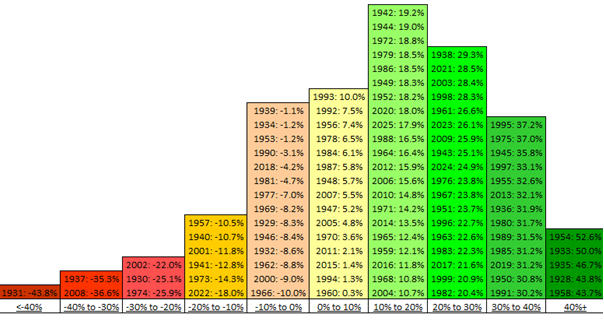
Since World War II, there have been 48 market corrections, but only 12 of those escalated into full-fledged bear markets. While a correction (typically defined as a 10%+ drop) is fairly common, most don’t become much more serious. Since 1980, the S&P 500 has fallen 5% or more in nearly every year (93% of the time) and dropped 10% or more in almost half of the years (47% of the time), showing that double-digit pullbacks happen more than half the time and aren’t unusual.

Promo for an article titled Transparency over Illusion — the case for liquid investments.

5. How can I avoid a wash sale?

You need to wait at least 30 days before or after selling an investment at a loss before buying it back (or buying anything too similar) so that the IRS doesn’t disallow your tax deduction. A good way to stay safe is to use the money to buy something different, like another stock or a different type of fund, instead of the same or nearly identical investment. Be careful if you trade in retirement accounts or across different accounts you own, because those count too. If you’re unsure what “too similar” means, it’s best to ask a tax professional.

6. How can I talk to my aging parents about their future?

Start any conversation with your aging parents in a calm and non-judgmental way and remember it doesn’t all have to happen at once. Gently focus on their hopes and needs, such as their health, housing, long-term care, legal documents and estate plans. Holidays or relaxed family times are great opportunities to begin; break the discussion into smaller chats over several days rather than doing it all at once.

Ask practical questions, like where they keep important records, whether they’ve updated wills, powers of attorney, healthcare directives, or long-term care plans — and make sure you know their doctors. Ask about their insurance policies and see if they will share access to any safety deposit boxes. Also, help shield them from financial scams by staying connected, teaching them about digital red flags and encouraging judgment-free communication so they feel supported and in control, not rushed or defensive.

7. What does a strong dollar mean?

A stronger U.S. dollar often is the result of higher interest rates that attract global investment into U.S. bonds or perceptions of the U.S. as a safer financial haven. It means more purchasing power abroad, letting Americans pay less when traveling or buying imports. However, it can hurt U.S. companies with large international operations by shrinking the value of overseas earnings when converted back to dollars and making their goods more expensive to foreign buyers.

8. What investments are liquid?

Liquid investments are those you can quickly buy or sell — like stocks, bonds, ETFs, mutual funds, money market funds and short-term instruments such as Treasury bills or CDs — without significantly affecting their price, making them great for accessing cash when needed. These assets benefit from regulatory oversight, transparent pricing and real-time valuations, which help reduce uncertainty and ensure accountability.

By contrast, illiquid investments like private deals or partnerships may promise higher returns but often come with long lock-up periods, less transparency and potential conflicts of interest. Keeping your portfolio in liquid markets helps preserve flexibility, clarity and control — even if those investments may not be as flashy as alternatives.

Promo for an article called The Formula for Wealth Is Simple, and It's Non-Negotiable.

The CD Wealth Formula

We help our clients reach and maintain financial stability by following a specific plan, catered to each client. 

Our focus remains on long-term investing with a strategic allocation while maintaining a tactical approach. Our decisions to make changes are calculated and well thought out, looking at where we see the economy is heading. We are not guessing or market timing. We are anticipating and moving to those areas of strength in the economy — and in the stock market. 

We will continue to focus on the fact that what really matters right now is time in the market, not out of the market. That means staying the course and continuing to invest, even when the markets dip, to take advantage of potential market upturns. We continue to adhere to the tried-and-true disciplines of diversification, periodic rebalancing and looking forward, while not making investment decisions based on where we have been.

It is important to focus on the long-term goal, not on one specific data point or indicator. Long-term fundamentals are what matter. In markets and moments like these, it is essential to stick to the financial plan. Investing is about following a disciplined process over time.

Preparing for Volatility — and Opportunity — in the Second Half of 2025

Volatility and uncertainty surrounding tariffs, geopolitical risks and interest rates marked the first half of 2025. While the market has rebounded from April lows, uncertainty remains at the forefront of investors’ minds for the second half of the year.

It’s been difficult for investors to discern the outcome of events such as tariff-induced trade wars and active military conflicts. This lack of clarity has impacted the decisions of investors and businesses. Ultimately, this led to the stock market correction we saw in the spring, as well as higher yields on U.S. Treasury Bonds and a decline in the value of the U.S. dollar. Nevertheless, it is imperative to remember how we started the year: with high valuations and positive outlooks priced into the market after the election.

Policy Uncertainty Has Weighed on Markets

Bloomberg U.S. Economic Policy Uncertainty Index

Line chart showing the Bloomberg U.S. Economic Policy Uncertainty Index from 1985 to today.
Sources: Capital Group, Bloomberg Index Services Ltd. Figures reflect the six-month moving average of the Bloomberg Economic Policy Uncertainty Index between June 30, 1985, and May 31, 2025. Index values are based on keywords and headlines from news articles.

As stocks entered correction mode in April, yields on Treasury Bonds rose rapidly, ultimately pushing President Trump to pause the tariff war. Yields on the 10-year Treasury were as high as 4.5%, while 30-year Treasury bonds rose above 5% for the first time in several years.

We anticipate that the Fed will cut rates one or two times in the second half of the year. When interest rates decrease, bond prices inversely increase. An increase in bond prices will be beneficial for longer maturities by providing a boost to fixed-income returns.

On the other hand, intermediate term bonds with maturities between two and 10 years can also provide yield and diversification with decreased sensitivity to changes in interest rates, making the portfolio well positioned for rate cuts from the Fed.

U.S. Treasury Yield Curve Has Begun to Normalize

Line chart showing the U.S. Treasury yield curve from 1985 to today.
Sources: Bloomberg, Refinitiv Datastream. The Bloomberg U.S. Aggregate Index represents the U.S. investment-grade fixed-rate bond market. As of May 31, 2025. *When the S&P 500 Index fell 18.7% from the record high on Feb. 19. 2025, to the recent low on April 8, 2025, the Bloomberg Aggregate Index gained 1%.

Inflation will continue to dominate the headlines for the remainder of the year, and people will continue to question how tariffs will impact inflation. This uncertainty and the desire to observe tariffs’ impact are the driving forces behind the Fed’s deliberate decision to wait on rate cuts.

The effects of the tariffs had not yet shown up in the economy by April or May. While we did begin to see some tariff impacts in the June inflationary data, disinflationary forces such as decreased rental prices, airfare and lodging countered tariffs’ effects.

As the chart below shows, Wall Street strategists have yet to arrive at a consensus for the ending index value for the S&P 500. For reference, the S&P 500’s value was 6,306 on July 22. On the top end, Wells Fargo predicts the S&P will rise 11% before year’s end. Conversely, Stifel anticipates the S&P will drop almost 13% from current levels. The average projection of Wall Street firms demonstrates the S&P finishing the year around 6,200 – a small dip from where we are now.

Year-End 2025 Forecasts for the S&P 500

Bar chart showing various predictions for the S&P 500's ending value this year.
Source: Yahoo Finance, as of July 8, 2025

The U.S. economy faces a myriad of challenges in the second half of the year: tariff-induced inflation, the Federal Reserve’s monetary policy and instability in different areas of the world. With stocks rebounding from April lows, the bar is high for the market for the remainder of the year, with investor sentiment and positive earnings growth supporting the current market.

Every market cycle is different, making investing amid uncertainty a challenge. However, it also highlights the importance of being invested in a diversified portfolio. Equities have historically been the highest-returning asset class over the long run, and we do not see anything altering that precedent. We will continue to closely monitor the markets and make changes, as necessary.

Promo for an article titled Understanding the 10-Year Treasury and Its Impact on Your Investments.

The CD Wealth Formula

We help our clients reach and maintain financial stability by following a specific plan, catered to each client. 

Our focus remains on long-term investing with a strategic allocation while maintaining a tactical approach. Our decisions to make changes are calculated and well thought out, looking at where we see the economy is heading. We are not guessing or market timing. We are anticipating and moving to those areas of strength in the economy — and in the stock market. 

We will continue to focus on the fact that what really matters right now is time in the market, not out of the market. That means staying the course and continuing to invest, even when the markets dip, to take advantage of potential market upturns. We continue to adhere to the tried-and-true disciplines of diversification, periodic rebalancing and looking forward, while not making investment decisions based on where we have been.

It is important to focus on the long-term goal, not on one specific data point or indicator. Long-term fundamentals are what matter. In markets and moments like these, it is essential to stick to the financial plan. Investing is about following a disciplined process over time.

Sources: Bloomberg, Capital Group, CNBC, Fidelity, Schwab, Yahoo

What to Expect Now That the ‘Big Beautiful Bill’ Has Become Law

On July 4, President Trump signed the “One Big Beautiful Bill” into law, which cements most of the tax cuts embedded in the 2017 Tax Cuts and Jobs Act (TCJA), along with some significant additional tax changes.

However, the primary question remains: What will be the long-term impact of this bill on the deficit? Let’s uncover what is inside this new tax law.

Permanent Changes

The following provisions will become a permanent part of the tax code, initially introduced in the original Tax Cuts and Job Act.

• The seven tax brackets with a top rate of 37% and a bottom rate of 10% will remain the same.
• The mortgage interest deduction will remain at its current limit of $750,000 in mortgage debt for joint filers ($375,000 for single filers).
• The State and Local Tax (SALT) deduction had been capped at $10,000. This will increase to $40,000 and then revert to $10,000 in 2030. The higher SALT cap will phase out for incomes over $500,000.
• The standard deduction will be made permanent and increase to $15,750 for single filers and $31,500 for joint filers. These amounts will be indexed for inflation after 2025.
• The lifetime gift and estate tax exclusions will increase to $15 million for single filers and $30 million for those who are married and filing jointly. The exclusions will be indexed for inflation going forward.
• The Child Tax Credit will be permanent and will increase to $2,200 per child starting in 2025.
• Those who do not itemize deductions can claim a deduction for charitable contributions of up to $1,000 ($2,000 for couples) starting in 2026.

Temporary Provisions (4 Years)

The legislation includes numerous temporary deductions and credits that are valid for tax years 2025 to 2028 only.

• Workers can deduct up to $25,000 in qualifying tip income and $12,500 in overtime pay ($25,000 for joint filers). These deductions phase out with income over $150,000 ($300,000 for joint filers).
• People who are 65 or older will get an additional $6,000 deduction that begins to phase out at an income of $75,000 for single filers and $150,000 for joint filers. This is in addition to the $2,000 deduction for single filers and $3,200 for joint filers.
• The new law allows for a deduction of up to $10,000 of loan interest for purchased vehicles whose final assembly took place in the U.S. The deduction would apply for single taxpayers with adjusted gross income of $100,000 or less ($200,000 for people filing jointly).

What Else Is New?

Other additions include a savings account for children and expanded usage for health savings accounts and 529 plans.

• Parents and relatives can now contribute up to $5,000 a year to a new savings account, called Trump accounts. Initially acting like a non-deductible IRA, contributions can be made until the beneficiary reaches the age of 18. Then, the account would effectively convert to a traditional IRA. Additionally, parents of newborns born between Jan. 1, 2025, and Dec. 31, 2028, would qualify for $1,000 in federal money to start the account.
• The legislation expands the use of 529 funds to include miscellaneous expenses such as testing fees, tutoring outside the home, and educational therapies, as well as tax-free withdrawals for recognized postsecondary credential programs.
• The legislation also broadens HSA eligibility by including more health plan types and participant categories.

The legislation does not eliminate taxes on Social Security benefits, which remain taxable up to 85% for individuals with income greater than $34,000, or $44,000 for a couple. However, the $6,000 deduction for those 65 and older may help offset taxes on Social Security benefits for some over the next four years.

Key Individual Tax Changes

Chart outlining the changes to tax law from the Big Beautiful Bill.
Source: CNBC

As you review the new tax legislation, it may be the perfect time to review your financial planning needs as well. This includes revisiting your investment portfolio, assessing tax planning opportunities, reevaluating retirement goals and managing your wealth transfer and legacy plans.

This summary of the new legislation contains merely a portion of the items that may apply to your family. We are always happy to meet and discuss any of the above to ensure that you remain on track with your financial profile and your goals.

Promo for an article titled Transparency over Illusion — the case for liquid investments.

The CD Wealth Formula

We help our clients reach and maintain financial stability by following a specific plan, catered to each client. 

Our focus remains on long-term investing with a strategic allocation while maintaining a tactical approach. Our decisions to make changes are calculated and well thought out, looking at where we see the economy is heading. We are not guessing or market timing. We are anticipating and moving to those areas of strength in the economy — and in the stock market. 

We will continue to focus on the fact that what really matters right now is time in the market, not out of the market. That means staying the course and continuing to invest, even when the markets dip, to take advantage of potential market upturns. We continue to adhere to the tried-and-true disciplines of diversification, periodic rebalancing and looking forward, while not making investment decisions based on where we have been.

It is important to focus on the long-term goal, not on one specific data point or indicator. Long-term fundamentals are what matter. In markets and moments like these, it is essential to stick to the financial plan. Investing is about following a disciplined process over time.

Sources: CNBC, Fidelity, Schwab