What does the low price of oil mean for you as an investor?

Last week was a historic week for the oil markets, as for the first time ever, futures contracts for West Texas Intermediate Crude traded negative to start the week.  Oil investors and traders were rushing to sell the May futures contracts as no one wanted to take delivery of oil, as there is nowhere to store it.

What does that mean for you as an investor?

We have seen global oil demand drop by 25 million barrels a day as the majority of the world economy has shut down to battle the COVID-19 pandemic. Going back to Economics 101, we are dealing with basic supply and demand issues for the price of oil.

As of today, there is a tremendous excess supply of oil.  With global demand down 25% and oil storage capacity almost completely full, we have no place to store additional barrels of oil.  Therefore, prices have to come down to combat excess supply.  How do oil prices eventually go back up? 

* Upstream companies begin cutting back on capital spending and reducing production – i.e. active rig counts have fallen over 40% this month.

* OPEC must cut oil production.

* Most importantly, when the global economy reopens, demand for oil will increase, thus causing prices in the future to increase.

A question that we receive often is, “How do I invest in oil in this very volatile time?  The future price of oil has to go up, right?”

For retail investors, unfortunately, there is no easy way to invest in the current price of a barrel of oil (often referred to as spot price).  Unlike gold, you cannot take possession of a barrel of oil, store it in your garage, and then sell it in the future when the price of oil has gone back up.  There are several ETF’s (exchange-traded funds) that use futures-based pricing.  These ETFs do not have good tracking records to accurately track the current price of oil.  For example, USO, the most heavily traded ETF, saw massive inflows last week as retail investors try to “buy the dip” in oil prices.  However, each month this ETF and others like it, have to continually roll into the next month future contract and end up paying more for the price of oil than in the current spot market.  This “contango” occurs as the price of a futures contract on oil is higher than the current price.  Consequently, we could actually see oil prices rise and the owners of the Exchange Traded Funds lose money.

In summary, while we all hope that the future price of oil will rise, there are no guarantees.  We can expect the price of oil to continue this volatile trend as the world navigates the unprecedented global pandemic.

__________________

This material contains an assessment of the market and economic environment at a specific point in time and is not intended to be a forecast of future events, or a guarantee of future results.  Forward-looking statements are subject to certain risks and uncertainties.  Actual results, performance, or achievements may differ materially from those expressed or implied.  Information is based on data gathered from what we believe are reliable sources.

The opinions expressed in this commentary are those of the author and may not necessarily reflect those held by Kestra Investment Services, LLC or Kestra Advisory Services, LLC.  This is for general information only and is not intended to provide specific investment advice or recommendations for any individual.  It is suggested that you consult your financial professional, attorney, or tax advisor with regard to your individual situation. 

Securities offered through Kestra Investment Services, LLC (Kestra IS), member FINRA/SIPC. Investment Advisory Services offered through Kestra Advisory Services, LLC (Kestra AS) an affiliate of Kestra IS. Kestra IS and Kestra AS are not affiliated with CD Wealth Management.

The adjustments we made in the most volatile month ever

As we are in this for the long haul, we know there will be peaks and valleys, and our plan is to continue to stay the course.  From a portfolio perspective, we continue to actively monitor your portfolio.  In late March, we made the following adjustments:

1. Increased large cap exposure, through additional exposure to technology and healthcare.

2. We funded the increase in large cap stocks by selling out of small and mid-cap stocks as well as real estate.

3. For fixed income, we sold emerging market debt and added to our U.S. bond portfolio through additional exposure to high quality corporate bonds.

From a planning perspective, we remain focused on tax loss harvesting, postponing Required Minimum Distributions for those clients who do not need the income from their IRAs, and repositioning the portfolio when appropriate.

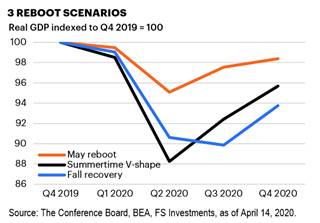
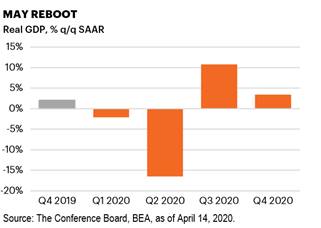
Over the weekend, the Wall Street Journal relayed that markets are reacting not just to where the economy is, but also to the range of outcomes for where it could be going.  Many factors are driving this recession with two prominent themes being the lockdowns and social distancing, which is in turn driven by the pandemic.  The best minds in our country are working around the clock to help us get past this pandemic.  The continued fiscal and monetary policy stimulus of epic proportions have pumped trillions of dollars into our economy.  Medical experts continue to collaborate to provide a cure.

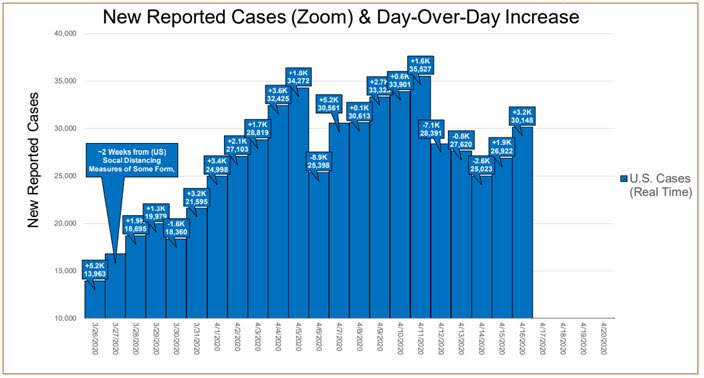
As of April 16th, the curve has flattened as the U.S. had fewer new reported cases than it did 12 days prior.

The continued movement in the markets, paired with all the economic headlines you see daily, can leave you searching for facts to try and make sense out of all the information we see and hear.  It has been roughly 2 months since the S&P 500 hit an all-time high, and about one month since it hit a low we have not seen since 2017.  This made March the most volatile month in U.S. history and the S&P 500’s 34% drop between February 19 and March 23 the fastest decline from a record bull market to a bear market.  Thanks to a massive government stimuli package, combined with discussions of upcoming plans to ease some restrictions due to COVID-19, the markets have rallied the last few weeks.  The S&P 500 is now just 15% below its pre-pandemic high and the Nasdaq 100 is positive (1.1%), as of Friday, April 17.

Furthermore, earnings season kicked off last week giving a glimpse into how the pandemic affected the financials of key corporations during the first quarter, with many companies even stating their expectations for the remainder of 2020.  The markets showed optimism last week for two potential reasons:

1. Talk of steps to begin to reopen the economy.

2. Flattening of the curve of new COVID-19 cases (see above graph).

Volatility has continued this week, with the markets coming down Monday and Tuesday and then rallying back on Wednesday.  This shows that uncertainty continues to drive this market.  While our views are to stay the course, we will continue to monitor and make necessary updates to your portfolio. 

Wall Street Journal – www.wsj.com

The source for any S&P 500 Index (Daily) Data, will be Yahoo Finance (^GSPC). It will be shown assuming historical dividends are reinvested and in U.S. Dollar terms.

____________________________

This material contains an assessment of the market and economic environment at a specific point in time and is not intended to be a forecast of future events, or a guarantee of future results.  Forward-looking statements are subject to certain risks and uncertainties.  Actual results, performance, or achievements may differ materially from those expressed or implied.  Information is based on data gathered from what we believe are reliable sources.

The opinions expressed in this commentary are those of the author and may not necessarily reflect those held by Kestra Investment Services, LLC or Kestra Advisory Services, LLC.  This is for general information only and is not intended to provide specific investment advice or recommendations for any individual.  It is suggested that you consult your financial professional, attorney, or tax advisor with regard to your individual situation. 

Securities offered through Kestra Investment Services, LLC (Kestra IS), member FINRA/SIPC. Investment Advisory Services offered through Kestra Advisory Services, LLC (Kestra AS) an affiliate of Kestra IS. Kestra IS and Kestra AS are not affiliated with CD Wealth Management.
Studying historical response to health crises

The Coronavirus Aid, Relief, and Economic Security Act (“CARES Act”) was signed into law by President Trump on Friday, March 27, 2020. Phase Three of the stimulus is estimated at more than $2.2 Trillion. Given the speed with which the U.S. economy is slowing down, the government is acting quickly to limit the economic damage wrought by the coronavirus and is indicating further actions may be needed.

Fiscal and monetary responses have been unprecedented. The Fed, for the first time, is buying corporate bonds.  Other central banks have moved into buying equities.  While the odds are stacked against the Federal Reserve stretching from corporate debt from buying stocks, the historical response has been to say, “never say never”.  We expect as the news regarding jobless claims increases, monetary policy should respond accordingly.  

Employers and workers will be adjusting to a new normal once this health crisis has passed.  There has often been concern regarding how the internet would handle increased traffic all at once and how it would react to those changes.  The good news is that US networks are handling internet traffic spikes without any major hiccups thus far while many people are having to work from home.  Video streaming is up 38% and video chat has been up 212%1.

Putting current market volatility into historical perspective will help you stay the course during turbulent times. While the market continues to be volatile, sticking to your investment strategy may be a challenge, but remains extremely important. Market cycles offer both obstacles and opportunities.

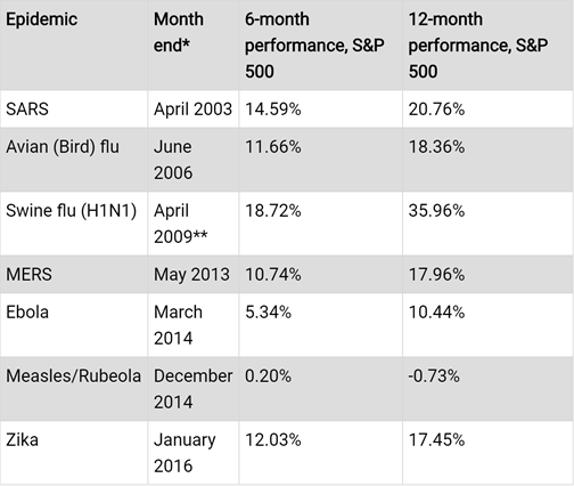
Remember, markets go up and down. Since the turn of the millennium, the market’s negative response to health crises has been relatively short-lived.

As this table shows, approximately six months after early reports of a major outbreak, the S&P 500 bounced back by an average of 10.47%. After 12 months, it rebounded by an average of 17.17%. Although there are no guarantees the current situation will follow a similar pattern, it may be reassuring to know that over even longer periods of time, stocks typically regain their upward trajectory, helping long-term investors who hold steady to recoup their temporary losses, catch their breath, and go on to pursue their goals.

HISTORICAL RESPONSE TO HEALTH CRISES 

(6 AND 12 MONTHS POST MAJOR OUTBREAK)

Source: Dow Jones Market Data, as cited on foxbusiness.com, January 27, 2020.
*End of month during which early incidents of outbreak were reported.
**H1N1 occurred during the financial crisis, when, as during other periods, many different factors influenced stock market performance.

The volatility in the market is largely driven by ever-increasing fears about the potential effects of the coronavirus (COVID-19) and its ultimate impact on the global economy. The unpredictability, strength, and suddenness of the historic tumble was and has been unsettling for all of us.

What should you do?

First, keep in mind that market downturns sometimes offer the chance to pick up potentially solid stocks at value prices, which could position a portfolio well for future growth. Again, there are no guarantees that stocks will perform to anyone’s expectations, and decisions could result in losses including a possible loss in principal, but it may be helpful to remember that some investors use downturns as opportunities to buy stocks that were previously overvalued relative to their perceived earnings potential.

Moreover, if you typically invest set amounts into your portfolio at regular intervals, a strategy known as dollar-cost averaging (DCA), which is commonly used in workplace retirement plans and college investment plans — take heart knowing you are  utilizing a method of investing that helps you behave like the value investors noted above. Through DCA, your investment dollars purchase fewer shares when prices are high, and more shares when prices drop. Essentially, in a down market, you automatically “buy low”, one of the most fundamental investment tenets. Over extended periods of volatility, DCA can result in a lower average cost for your holdings than the investment’s average price over the same time period.

We are closely monitoring the still-unfolding situation. We do not currently find compelling reasons that would justify overriding our asset allocation methodology despite the current elevated uncertainty from the Coronavirus. CD Wealth Management continues to believe that our clients should remain patient and adhere to their well-constructed, diversified investment portfolio anchored to their long-term goals and time horizon.

1 Barrons.com, April 5, 2020

____________________________________

This material contains an assessment of the market and economic environment at a specific point in time and is not intended to be a forecast of future events, or a guarantee of future results.  Forward-looking statements are subject to certain risks and uncertainties.  Actual results, performance, or achievements may differ materially from those expressed or implied.  Information is based on data gathered from what we believe are reliable sources.

The opinions expressed in this commentary are those of the author and may not necessarily reflect those held by Kestra Investment Services, LLC or Kestra Advisory Services, LLC.  This is for general information only and is not intended to provide specific investment advice or recommendations for any individual.  It is suggested that you consult your financial professional, attorney, or tax advisor with regard to your individual situation.  

Securities offered through Kestra Investment Services, LLC (Kestra IS), member FINRA/SIPC. Investment Advisory Services offered through Kestra Advisory Services, LLC (Kestra AS) an affiliate of Kestra IS. Kestra IS and Kestra AS are not affiliated with CD Wealth Management.
Saving for Retirement and a Child’s Education at the Same Time

Know what your financial needs are

The first step is to determine your financial needs for each goal. Answering the following questions can help you get started:

For retirement:

  • How many years until you retire?
  • Does your company offer an employer-sponsored retirement plan or a pension plan? Do you participate? If so, what’s your balance? Can you estimate what your balance will be when you retire?
  • How much do you expect to receive in Social Security benefits? (One way to get an estimate of your future Social Security benefits is to use the benefit calculators available on the Social Security Administration’s website, www.ssa.gov. You can also sign up for a my Social Security account so that you can view your online Social Security Statement. Your statement contains a detailed record of your earnings, as well as estimates of retirement, survivor’s, and disability benefits.)
  • What standard of living do you hope to have in retirement? For example, do you want to travel extensively, or will you be happy to stay in one place and live more simply?
  • Do you or your spouse expect to work part-time in retirement?

For college:

  • How many years until your child starts college?
  • Will your child attend a public or private college? What’s the expected cost?
  • Do you have more than one child whom you’ll be saving for?
  • Does your child have any special academic, athletic, or artistic skills that could lead to a scholarship?
  • Do you expect your child to qualify for financial aid?

Many on-line calculators are available to help you predict your retirement income needs and your child’s college funding needs.

Though college is certainly an important goal, you should probably focus on your retirement if you have limited funds. With generous corporate pensions mostly a thing of the past, the burden is primarily on you to fund your retirement. But if you wait until your child is in college to start saving, you’ll miss out on years of potential tax-deferred growth and compounding of your money. Remember, your child can always attend college by taking out loans (or maybe even with scholarships), but there’s no such thing as a retirement loan!

Figure out what you can afford to put aside each month

After you know what your financial needs are, the next step is to determine what you can afford to put aside each month. To do so, you’ll need to prepare a detailed family budget that lists all of your income and expenses. Keep in mind, though, that the amount you can afford may change from time to time as your circumstances change. Once you’ve come up with a dollar amount, you’ll need to decide how to divvy up your funds.

If possible, save for your retirement and your child’s college at the same time

Ideally, you’ll want to try to pursue both goals at the same time. The more money you can squirrel away for college bills now, the less money you or your child will need to borrow later. Even if you can allocate only a small amount to your child’s college fund, say $50 or $100 a month, you might be surprised at how much you can accumulate over many years. For example, if you saved $100 every month and earned 8% annually, you’d have $18,415 in your child’s college fund after 10 years. (This example is for illustrative purposes only and does not represent a specific investment. Investment returns will fluctuate and cannot be guaranteed.)

If you’re unsure about how to allocate your funds between retirement and college, a professional financial planner may be able to help. This person can also help you select appropriate investments for each goal. Remember, just because you’re pursuing both goals at the same time doesn’t necessarily mean that the same investments will be suitable. It may be appropriate to treat each goal independently.

Help! I can’t meet both goals

If the numbers say that you can’t afford to educate your child or retire with the lifestyle you expected, you’ll probably have to make some sacrifices. Here are some suggestions:

  • Defer retirement: The longer you work, the more money you’ll earn and the later you’ll need to dip into your retirement savings.
  • Work part-time during retirement.
  • Reduce your standard of living now or in retirement: You might be able to adjust your spending habits now in order to have money later. Or, you may want to consider cutting back in retirement.
  • Increase your earnings now: You might consider increasing your hours at your current job, finding another job with better pay, taking a second job, or having a previously stay-at-home spouse return to the workforce.
  • Invest more aggressively: If you have several years until retirement or college, you might be able to earn more money by investing more aggressively (but remember that aggressive investments mean a greater risk of loss). Note that no investment strategy can guarantee success.
  • Expect your child to contribute more money to college: Despite your best efforts, your child may need to take out student loans or work part-time to earn money for college.
  • Send your child to a less expensive school: You may have dreamed your child would follow in your footsteps and attend an Ivy League school. However, unless your child is awarded a scholarship, you may need to lower your expectations. Don’t feel guilty — a lesser-known liberal arts college or a state university may provide your child with a similar quality education at a far lower cost.
  • Think of other creative ways to reduce education costs: Your child could attend a local college and live at home to save on room and board, enroll in an accelerated program to graduate in three years instead for four, take advantage of a cooperative education where paid internships alternate with course work, or defer college for a year or two and work to earn money for college.
If you have several years until retirement or college, you might be able to earn more money by investing more aggressively.

Can retirement accounts be used to save for college?

Yes. Should they be? That depends on your family’s circumstances. Most financial planners discourage paying for college with funds from a retirement account; they also discourage using retirement funds for a child’s college education if doing so will leave you with no funds in your retirement years. However, you can certainly tap your retirement accounts to help pay the college bills if you need to. With IRAs, you can withdraw money penalty free for college expenses, even if you’re under age 59½ (though there may be income tax consequences for the money you withdraw). But with an employer-sponsored retirement plan like a 401(k) or 403(b), you’ll generally pay a 10% penalty on any withdrawals made before you reach age 59½ (age 55 or 50 in some cases), even if the money is used for college expenses. There may be income tax consequences, as well. (Check with your plan administrator to see what withdrawal options are available to you in your employer-sponsored retirement plan.)