

As we approach Memorial Day and the start of summer, it is a good time to look back on the first five months of the year for some perspective. The markets experienced volatility, driven by the war in Iran that pushed oil prices higher and renewed concerns about inflation, which caused the markets to decline.
The S&P nearly fell into correction territory — a drop of more than 10% in value. Just like last year, however, stocks rebounded sharply in a V-shaped recovery, with the index reaching new all-time highs in April and May.
Why did the market rebound so quickly?
As the saying goes, it’s the economy. In the first quarter, the U.S. economy continued to grow, powered by consumption and spending on AI technologies. Manufacturing activity increased, showing that companies remain confident in the economic outlook.
While we have seen some large companies laying off employees, the job market overall remains steady, with unemployment holding close to 4.3%. These are not signs of an imminent recession.
That said, this does not mean the coast is clear. Tensions remain high in the Middle East, and as a result, oil prices remain elevated, keeping inflation higher.
For some, the thought of $100 oil prices and a crisis in the Middle East evokes memories of gas lines in the 1970s. While no one likes paying more at the pump, today’s households are less sensitive to higher energy costs, thanks to higher incomes, better energy efficiency, and stronger personal balance sheets.
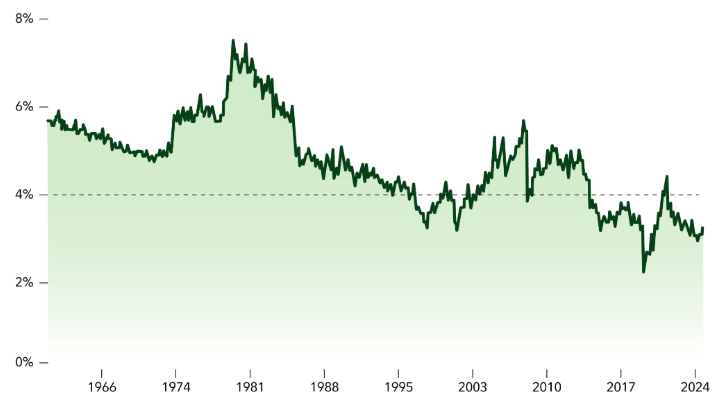
Energy consumption as a percentage of income is less than half of what it was in the late 1970s and early 1980s. What matters most now is how long oil prices remain elevated. Oil futures are predicting that by the end of the year, the price of oil will return to the $80s, a far cry from the peak of $120.
Energy consumption as a percent of income is near all-time lows
One of the most important drivers of market returns is corporate earnings. While valuations may be elevated in certain sectors, prices alone don’t indicate a prolonged downturn in the market. In the first quarter of 2026, both the U.S. and emerging markets saw year-over-year earnings growth in the double digits.
About 80 percent of the companies in the S&P reported positive earnings surprises, revenue growth, and healthy profits. Analysts are predicting strong potential earnings growth for the second half of 2026.
Why? Because the consumer has remained resilient in light of higher oil prices, supported by positive wage growth, more money per household, and tax cuts from the Big Beautiful Bill.
We recognize that lower-income households feel greater pressure from higher inflation. However, on average, consumers aren’t overly stretched. The amount of debt consumers have today is far less than what we saw during the financial crisis of 2008–2009.
Another positive economic indicator is manufacturing activity. The Purchasing Manager’s Index (PMI), which measures current and future business conditions within manufacturing, has moved into expansion territory — indicating that companies are confident demand will continue.
Outside of the U.S., companies also are reporting improved manufacturing conditions, following nearly three years of contraction. Large companies continue to invest in infrastructure, especially in the AI space, such as data centers, chips, and electricity. This has a trickle-down effect on the economy as well.

Watching inflation closely
At the same time, it is important to balance these positive signals with the risks we continue to monitor closely. Inflation remains one of the biggest concerns. The most recent data shows that consumer prices — excluding food and energy — are moving above 3%, well above the Fed’s 2% target rate.
If oil prices remain elevated, inflationary pressures could persist, potentially leading the Fed to keep interest rates higher for longer or even raise them further. That could place additional pressure on mortgage rates and credit card rates while also increasing volatility in equity markets.
In this more uncertain backdrop, maintaining perspective becomes especially important; remember that volatility is not in and of itself a change in the economy or the stock market. AI has the potential to boost productivity and corporate profits, even in the face of higher inflation, but it also can disrupt the job market and business plans.
As always, it is vital to stay focused on the long-term plan — and not to get caught up in the noise if and when volatility returns to the market.

The CD Wealth Formula
We help our clients reach and maintain financial stability by following a specific plan, catered to each client.
Our focus remains on long-term investing with a strategic allocation while maintaining a tactical approach. Our decisions to make changes are calculated and well thought out, looking at where we see the economy heading. We are anticipating and moving to those areas of strength in the economy and in the stock market.
We will continue to focus on the fact that what really matters right now is time in the market, not out of the market. That means staying the course and continuing to invest, even when the markets dip, to take advantage of potential market upturns. We continue to adhere to the proven disciplines of diversification, periodic rebalancing, and forward-looking strategies, while avoiding reliance on stale retrospective data.
It is important to focus on the long-term goal, not on one specific data point or indicator. Long-term fundamentals are what matter. In markets and moments like these, it is essential to stick to the financial plan. Investing is about following a disciplined process over time.
Sources: Fidelity, JP Morgan


