This year-end financial checklist will help you plan and save

As 2021 comes to an end, the time has come to review some year-end strategies to ensure that your wealth plan reflects any changes in your circumstances or your goals, the economic landscape and current tax environment. We recommend that you review the following checklist for planning strategies to consider; some may apply to you, while others may not. We recommend speaking with your CPA or accountant to review as well.

Income tax strategies

• Traditional year-end planning focuses on deferring income to a future year and accelerating deductions into the current year. However, if you anticipate that your marginal income tax rates will increase next year — whether due to increased income or changes in tax legislation — you may consider accelerating income into 2021 and deferring deductions to 2022.

• If you anticipate being in a lower taxable income bracket in 2022:

Defer income and any sale of capital gain property (if possible) to postpone taxable income.

— If you are itemizing on your tax return, bunch your medical expenses in the current year to meet the percentage of your adjusted gross income needed to claim those deductions.

— Make your January mortgage payment in December so that you can deduct the interest on your 2021 tax return.

Tax-related investment strategies

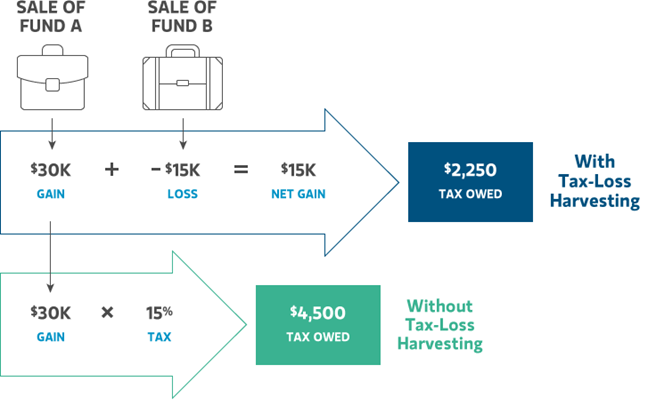
Tax-loss harvesting is the strategy of selling securities at a loss to offset a capital gain tax liability. It involves selling a taxable investment that has declined in value, replacing it with a similar investment and using the loss incurred to offset any gains. 

— Short-term losses are best used to offset short-term gains, and long-term losses can be used to offset long-term gains. Losses can help offset $3,000 of income on a joint tax return in one year.

— Be aware that the IRS wash-sale rule dictates that you must wait at least 31 days before buying back a holding that is sold for a loss.

• Make sure you have satisfied your required minimum distribution (RMD). Once you turn 72 years old, you are required to take minimum distributions from your traditional IRAs and most employer-sponsored retirement plans. 

— RMDs were not required in 2020 after Congress passed the CARES Act in response to the pandemic, but minimum distributions resumed in 2021, and failure to take them may result in a 50% penalty.

— You may have an RMD for an inherited IRA, depending on when you inherited it. (Tax laws have changed for newly inherited IRAs.) 

Promo for an article called The RMD Deadline is Approaching — Here is What You Need to Know

Retirement planning strategies

• Maximize your IRA contributions. You may be able to deduct annual contributions of up to $6,000 to your traditional IRA and $6,000 to your spouse’s IRA ($7,000 if over age 50).

• Make a Roth contribution if you qualify under the applicable income limits.

• Consider increasing or maximizing your 401(k) contribution. For 2021, the maximum is $19,500 for those who are younger than 50 and $26,000 for those who are 50 or older.

• Consider contributing to a Roth 401(k) plan if your plan allows.

• Consider setting up a Roth IRA for each of your children who have earned income during the year.

• Determine the optimal time to begin taking Social Security benefits if you over age 62. 

Gifting strategies

• Consider making gifts up to $15,000 per person as allowed under the federal annual gift tax exclusion. In 2022, the gift tax exclusion is projected to increase to $16,000 per person.

• Take advantage of the ability to deduct up to 100% of adjusted gross income (AGI) for a cash gift to a public charity in 2021. 

• Create a donor advised fund for an immediate income tax deduction and provide immediate and future benefits to a charity over time.

• If you already have a donor advised fund, consider gifting appreciated assets that have been held longer than one year to get the fair market value income tax deduction while avoiding income tax on the appreciation.

• Combine multiple years of charitable giving into a single year to exceed the standard deduction threshold.

• If you are over age 70 ½ (or 72, depending on your date of birth), consider making a direct transfer from an IRA to a public charity. The distribution is excludable from gross income. 

Wrapping up 2021, planning for 2022

• Work with your CPA to provide capital gains and investment income information for a more accurate year-end projection.

• Check your Health Savings Account contributions for 2021. If you qualify, you can contribute up to $3,600 (individual) or $7,200 (family), plus an additional $1,000 catch-up if you are over 55.

• Discuss major life events with CD Wealth Management to confirm you have clarity in your current situation.

• Double-check your beneficiary designations for employer-sponsored retirement plans, IRAs, Roth IRAs, annuities, life insurance policies, etc.

• Review that you have a trusted contact on each of your accounts to help protect assets against fraud. 

Promo for an article called Great News for Retirees: Social Security Gets a Boost

So, what can we learn from all this? The end of year is a perfect time to review your financial planning needs. This includes reviewing the investment portfolio, assessing year-end tax planning opportunities, reviewing retirement goals and managing your wealth transfer and legacy plans. The checklist above includes just some of the items that may apply to your family. We are happy to meet to discuss any of the above to ensure that you remain on track with your financial profile.

From a portfolio perspective, we continue to adhere to the tried-and-true disciplines of diversification, periodic rebalancing and looking forward, while not making investment decisions based on where we have been. Making market decisions based on what might happen may be detrimental to long-term performance. The key is to stay invested and stick with the financial plan. Markets go up and down over time, and downturns present opportunities to purchase stocks at a lower value. As we say each week, it is important to stay the course and focus on the long-term goal, not on one specific data point or indicator.

It all starts with a solid financial plan for the long run that understands the level of risk that is acceptable for each client. Regarding investments, we believe in diversification and having different asset classes that allow you to stay invested. The best option is to stick with a broadly diversified portfolio that can help you to achieve your own specific financial goals — regardless of market volatility. Long-term fundamentals are what matter.

Sources: BNY Mellon, Forbes, RBC

Promo for article on the formula for wealth

This material contains an assessment of the market and economic environment at a specific point in time and is not intended to be a forecast of future events, or a guarantee of future results. Forward-looking statements are subject to certain risks and uncertainties. Actual results, performance, or achievements may differ materially from those expressed or implied. Information is based on data gathered from what we believe are reliable sources.

Using diversification as part of your investment strategy neither assures nor guarantees better performance and cannot protect against loss of principal due to changing market conditions.

Past performance is not a guarantee of future results.

The opinions expressed in this commentary are those of the author and may not necessarily reflect those held by Kestra Investment Services, LLC or Kestra Advisory Services, LLC. This is for general information only and is not intended to provide specific investment advice or recommendations for any individual. It is suggested that you consult your financial professional, attorney, or tax advisor with regard to your individual situation.

Securities offered through Kestra Investment Services, LLC (Kestra IS), member FINRA/SIPC. Investment Advisory Services offered through Kestra Advisory Services, LLC (Kestra AS) an affiliate of Kestra IS. Kestra IS and Kestra AS are not affiliated with CD Wealth Management. Investor Disclosures: https://bit.ly/KF-Disclosures

Capital gains strategies, regardless of Biden’s plan

Last Friday, President Biden unveiled detailed explanations on how the administration plans to pay for the new $6 trillion budget. The biggest surprise in the proposal is that the administration is seeking a retroactive effective date on a capital gains tax rate hike from 20% to 39.6% for households making more than $1 million. If you add in the net investment income tax for high-income earners, this raises the top long-term capital gains tax rate to 43.4%, up from the current 23.8%.

“This proposal would be effective for gains required to be recognized after the date of the announcement,” the Treasury Department said, referring to an address to Congress on April 28. The purpose of the backdating proposal is to avoid a sell-off ahead of the capital-gains rate hike, if it were to be approved.

A historical review of legislation suggests tax-rate decreases are easier to implement on a retroactive basis from a policy and political standpoint. With life’s only certainties being death and taxes, the tax implications of a transaction would ideally be known at the time of the event — and not retroactive.

As we wrote about last week, tax changes are far from certain, and a lot of ideas are being thrown around in Washington. We are approaching our financial planning with maximum flexibility. It is safer to plan for what we know, rather than what we don’t know, and that is our approach. We believe the proposals in their current state will not pass through Congress, but we also cannot begin to predict precisely what will pass. 

Having said that, the following are capital gains tax strategies that we already use for your benefit: 

1. Donating appreciated securities to charity or a donor advised fund. This is a tax-smart way for those who are charitably inclined to donate money. The market value of the security on the date of donation is a charitable tax deduction, and there are no capital gains taxes on the donated assets.

2. Tax loss harvesting. This strategy involves realizing tax losses on holdings and then using those losses to offset realized gains. Any remaining losses incurred in a year can be carried over to subsequent years and help offset future capital gains.

3. Converting traditional IRA assets to Roth IRA. This works well for those in lower income tax brackets. Investing in stocks with higher growth potential in a Roth IRA will negate any taxation of future capital gains. There are no taxes in the year of the gain, and the money can be withdrawn tax-free at retirement (if certain rules are followed). Also, assets in an inherited Roth IRA are tax-free to beneficiaries upon withdrawal if the five-year rule was met prior to death. This includes capital gains that were realized in the account along the way. 

So, what can we learn from all this? Avoiding potentially higher capital gains rates may be a good idea, if it makes sense in the context of your overall financial plan. It is important to remember that the proposed tax changes are just that — proposals, not laws. Changes can and will occur, and there is no guarantee that the proposal or introduced bills will become law. In our opinion, as of today, a wait-and-see approach is the best path until we have further clarity. However, concern about changes in estate tax law is a good reason to consult with estate attorneys to discuss the current plan. We will be ready and proactive if tax law changes occur.

From an investment portfolio perspective, we continue to adhere to the tried-and-true disciplines of diversification, periodic rebalancing and looking forward, not making investment decisions based on where we have been.

Making market decisions based on what might happen may be detrimental to long-term performance. The key is to stay invested and stick with the financial plan. Markets go up and down over time, and downturns present opportunities to purchase stocks at a lower value. 

It all starts with a solid financial plan for the long run that understands the level of risk that is acceptable for each client. Regarding investments, we believe in diversification and having different asset classes that allow you to stay invested. The best option is to stick with a broadly diversified portfolio that can help you to achieve your own specific financial goals — regardless of market volatility. Long-term fundamentals are what matter. 

Sources: National Law Review, The Hill, New York Times

This material contains an assessment of the market and economic environment at a specific point in time and is not intended to be a forecast of future events, or a guarantee of future results. Forward-looking statements are subject to certain risks and uncertainties. Actual results, performance, or achievements may differ materially from those expressed or implied. Information is based on data gathered from what we believe are reliable sources.

Using diversification as part of your investment strategy neither assures nor guarantees better performance and cannot protect against loss of principal due to changing market conditions.

Past performance is not a guarantee of future results.

The opinions expressed in this commentary are those of the author and may not necessarily reflect those held by Kestra Investment Services, LLC or Kestra Advisory Services, LLC. This is for general information only and is not intended to provide specific investment advice or recommendations for any individual. It is suggested that you consult your financial professional, attorney, or tax advisor with regard to your individual situation.

Securities offered through Kestra Investment Services, LLC (Kestra IS), member FINRA/SIPC. Investment Advisory Services offered through Kestra Advisory Services, LLC (Kestra AS) an affiliate of Kestra IS. Kestra IS and Kestra AS are not affiliated with CD Wealth Management. Investor Disclosures: https://bit.ly/KF-Disclosures

3 strategies for tax savings, no matter who wins the election

With the presidential and congressional elections less than three weeks away, many investors are wondering if a new administration and a new Congress might pass tax reforms that alter the current tax landscape. After the Nov. 3 elections, we will get a better sense of the potential for tax reform, but in the interim, we continue to look for opportunities to bolster tax savings for our clients, regardless of who takes office in 2021.

Strategy No. 1: Tax Loss Harvesting

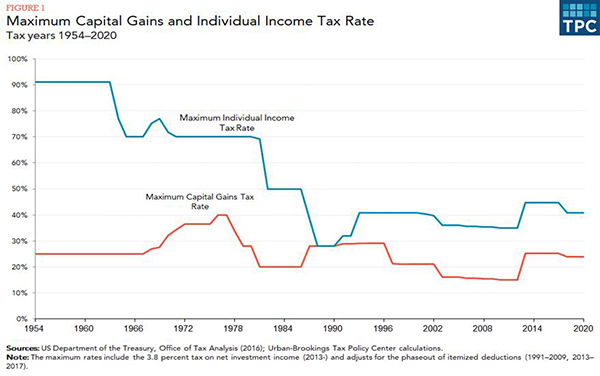
Under current tax law, it’s possible to offset current capital gains with capital losses you’ve incurred during the year or carried over from a prior tax return. Capital gains are the profits you realize when you sell an investment for more than you paid for it, while capital losses are the losses you realize when you sell an investment for less than you paid for it. Short-term capital gains are taxed as ordinary income rates, whereas long-term capital gains are taxed at a lower capital gains rate. The chart above displays the historical gap between maximum individual tax rate and maximum capital gains tax rate, including the 3.8% tax on net investment income.

As seen in the chart, the current spread between the two tax rates is not that wide. However, the ability to reduce the tax on both short-term and long-term capital gains by harvesting losses can help offset the gains one incurs from taking profits. Harvesting the loss has no effect on the portfolio value, as one can use the proceeds from the sale to buy a similar investment. This allows the investor to maintain similar asset allocation and reduce federal income taxes, as seen in the example below. Throughout the year, we continue to look for opportunities to harvest losses and take profits, all while maintaining the current risk tolerance.

Tax-loss harvesting and portfolio rebalancing can provide nice synergies as they play different roles in portfolio management. When we rebalance a portfolio, we are managing risk in the portfolio by selling holdings that have outsized their target holdings and adding those gains to positions that may have losses or not grown as much. Often in rebalancing, the portfolio will experience sizeable capital gains. That’s where tax-loss harvesting helps reduce the gains and brings the risk of the portfolio back to its target allocation.
 
Strategy No. 2: Converting to a Roth IRA
 
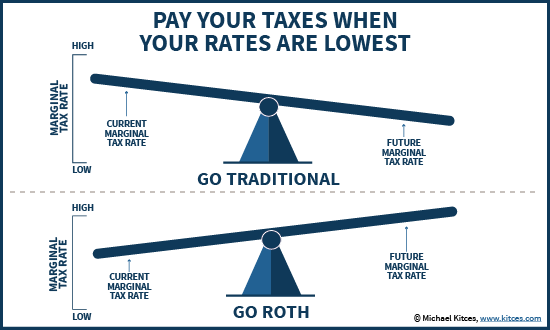
A traditional IRA/401K is funded with pre-tax contributions. Future withdrawals from your IRA/401K are then taxed at ordinary income rates. A Roth IRA/401K is funded with after-tax dollars and the withdrawals are tax-free, if the qualifications are satisfied. Individuals who have a majority of their retirement assets in traditional IRA/401K might consider converting a portion of those assets to a Roth retirement account for “tax diversification.” With tax rates currently at historically favorable levels, now might be an opportune time to do a Roth conversion as the IRS treats Roth IRA conversions as taxable income.  

Strategy No. 3: Increasing charitable contributions

The Tax Cuts and Jobs Act passed in 2017 increased the deduction limit for cash contributions made to public charities to 60% of Adjusted Gross Income from 50%. The CARES Act, passed earlier this year due to the global pandemic, provided additional tax relief to those individuals donating to charity in 2020. For this tax year, taxpayers can elect on their 2020 income tax return to deduct up to 100% of adjusted gross income for cash gifts made to public charities.

Also, under the CARES Act, taxpayers can gift long-term appreciated securities to public charities (including donor advised funds) up to 30% of their adjusted gross income while also making cash gifts to public charities totaling up to 70% of adjusted gross income. For those who are charitably inclined, 2020 offers an opportunity to donate more to your favorite charities and potentially reduce your taxable income.

What does this mean for you?

We will continue to monitor the financial plan and the portfolios to look for opportunities to tax-loss harvest, discuss Roth IRA conversions and potentially donate appreciated stock to your favorite charities. We remain hypervigilant going into the election and will make tweaks to the portfolios when necessary.

_____

This material contains an assessment of the market and economic environment at a specific point in time and is not intended to be a forecast of future events, or a guarantee of future results.  Forward-looking statements are subject to certain risks and uncertainties.  Actual results, performance, or achievements may differ materially from those expressed or implied.  Information is based on data gathered from what we believe are reliable sources.

S&P 500 Index is an unmanaged group of securities considered to be representative of the stock market in general.  You cannot directly invest in the index.
The opinions expressed in this commentary are those of the author and may not necessarily reflect those held by Kestra Investment Services, LLC or Kestra Advisory Services, LLC.  This is for general information only and is not intended to provide specific investment advice or recommendations for any individual.  It is suggested that you consult your financial professional, attorney, or tax advisor with regard to your individual situation. 
 
Securities offered through Kestra Investment Services, LLC (Kestra IS), member FINRA/SIPC. Investment Advisory Services offered through Kestra Advisory Services, LLC (Kestra AS) an affiliate of Kestra IS. Kestra IS and Kestra AS are not affiliated with CD Wealth Management.

Click here for additional investor disclosures.

In the news: Holiday sales predictions, air travel and inflation

With just about nine weeks until the presidential election and global pandemic developments making headlines every day, there is no shortage of news for the conscious investor to study. We are always watching out for the developments that will affect our economic outlook, and here are a few that caught our eye this week, including a change in inflation policy, tough times for nonprofits and predictions for the holiday shopping season.

+++

From Forbes: Federal Reserve Chairman Jerome Powell announced last week that the central bank would aim to maintain inflation that averages 2 percent over time. It’s a change from the Fed’s earlier policy, under which it raised rates to keep inflation from going higher than 2 percent.

TL;DR: The COVID-19 pandemic cut inflation nearly in half, and by April of this year it had reached its lowest level in a decade. Under the Fed’s new policy, it will tolerate periods of higher inflation in order to balance out periods of lower inflation and to focus on keeping unemployment low.

+++

From CNBC: Few industries have been hit as hard by the pandemic as air travel, but new United CEO Scott Kirby says he believes his business will rebound, especially when it comes to business travel, after a vaccine is approved and distributed.

TL;DR: The Transportation Safety Administration says passenger levels are down 70 percent over last year. United, which has parked 40 percent of its fleet, could cut as many as 36,000 jobs starting in October; the airline is not planning on seeing 2019 passenger levels again until 2024.

+++

From Bloomberg: The head of the U.S. Food and Drug Administration promised that the review of a potential COVID-19 vaccine would be transparent to the public and that data alone would be behind the agency’s decision to approve and distribute it.

TL;DR: A vaccine is considered crucial to end the pandemic and revive the U.S. economy, as well as to President Trump’s re-election campaign. The agency has found itself trapped between accusations of moving too slowly, behind a political agenda, or too quickly, without sufficient data. “I would not participate in any decision that was made on anything other than science,” Commissioner Stephen Hahn said.

+++

From Inc.: Businesses that are hoping to recover from a challenging economy in 2020 by capitalizing on holiday sales would do well to understand consumer trends and opportunities based on the pandemic and its ripple effects.

TL;DR: The economy may pose challenges, but experts say consumers are likely to find a way to spend. Stores would do well to optimize their physical spaces and staffs for in-and-out shopping or curbside pickup and to cater to people who are socially distancing. Home entertainment should be a popular category, and food spending could decline this year. Also, there may be far more returns than normal, based on the rise in online shopping and the decline in shopping in person.

+++

From The Dallas Morning News: Charities across the U.S. say they are being squeezed by competing realities of COVID-19: a drop in donations that is leading to layoffs or furloughs, and economic effects that are causing their services to be more in demand.

TL;DR: Texas is particularly vulnerable to strain on nonprofits, which account for one of every eight jobs in the state. The nonprofit sector is the third-largest workforce of any U.S. industry, with more than 100,000 more workers than the nation’s manufacturers, and though billions in government aid have poured into small businesses, some say nonprofits have been an afterthought.

This material contains an assessment of the market and economic environment at a specific point in time and is not intended to be a forecast of future events, or a guarantee of future results.  Forward-looking statements are subject to certain risks and uncertainties.  Actual results, performance, or achievements may differ materially from those expressed or implied.  Information is based on data gathered from what we believe are reliable sources.

The opinions expressed in this commentary are those of the author and may not necessarily reflect those held by Kestra Investment Services, LLC or Kestra Advisory Services, LLC.  This is for general information only and is not intended to provide specific investment advice or recommendations for any individual.  It is suggested that you consult your financial professional, attorney, or tax advisor with regard to your individual situation. 

Securities offered through Kestra Investment Services, LLC (Kestra IS), member FINRA/SIPC. Investment Advisory Services offered through Kestra Advisory Services, LLC (Kestra AS) an affiliate of Kestra IS. Kestra IS and Kestra AS are not affiliated with CD Wealth Management.

Preparing for the Future with Straight Talk and Careful Planning

THE SITUATION

The Johnsons are a wealthy couple in their 80s living in Dallas. They have a significant estate and want a strategic plan in place for how to make generous donations to various charities anonymously. They also have a grown daughter married to a man whom the Johnsons do not fully trust. They want to ensure that their daughter and grandchildren are cared for with money that is specifically designated for them alone.

THE SOLUTION

As longtime clients of CD Wealth Management, Scott Cohen and his team have worked closely with the Johnsons for many years to protect and grow their portfolio. When the Johnsons indicated they were ready to talk about legacy planning, Scott set up a series of family meetings with the Johnsons and their daughter. He encouraged the Johnsons to speak openly about their desire to care for their daughter and her children and their concerns about their son-in-law. Through the meetings, the Johnsons and their daughter were able to begin to heal a rift that had been growing. Additionally Scott helped them fund trusts for each of their grandchildren and named their daughter as trustee. 

Scott and his team also worked with the Johnson’s attorneys to create a foundation dedicated to providing anonymous donations to various Dallas-based charities. The Johnsons have the confidence of knowing their wealth is protecting their daughter and her children and blessing thousands through their generous anonymous gifts to landmark Dallas charitable institutions. 

The Johnsons are real clients. Their family name has been changed to protect their privacy.